ROI of Apartments, Villas and Townhouses in Dubai: What's More Profitable?
Since 2014, Dubai's Land Department has registered 963,944 residential sales. Fewer than a thousand of them can be identified as a townhouse — about one transaction in every thousand.
If you have compared property types in this city, you have already met two numbers: a 7.15% gross yield on apartments and 4.98% on villas and townhouses, both published by Property Monitor for April 2026. What rarely gets printed alongside them is that the second figure averages two products the Land Department never separated, and that a villa and an apartment now cost the same per square foot.
So the question worth asking is what each type asks of you: how much capital it locks up, what it costs to keep, and how long you wait when you want out. This page measures those three things using the registry's own transactions.
The broader case for the city — tax treatment, registry protections, oversupply risk — sits in our guide to investing in Dubai real estate in 2026.

How we built the numbers on this page
"Dubai's open transaction register has no category for townhouses, so we built one. We took every residential sale the Land Department has published, kept the sales, and searched the building names for the word the registry itself never uses. Everything here comes from that rebuilt dataset, from the Land Department's tenancy records, and from published yields we checked against a second provider. It is also why several figures will not match what you have read elsewhere. Most comparisons average two and a half years of prices into one number, and villas have repriced too quickly for that to survive."
How Does ROI Differ by Property Type in Dubai?
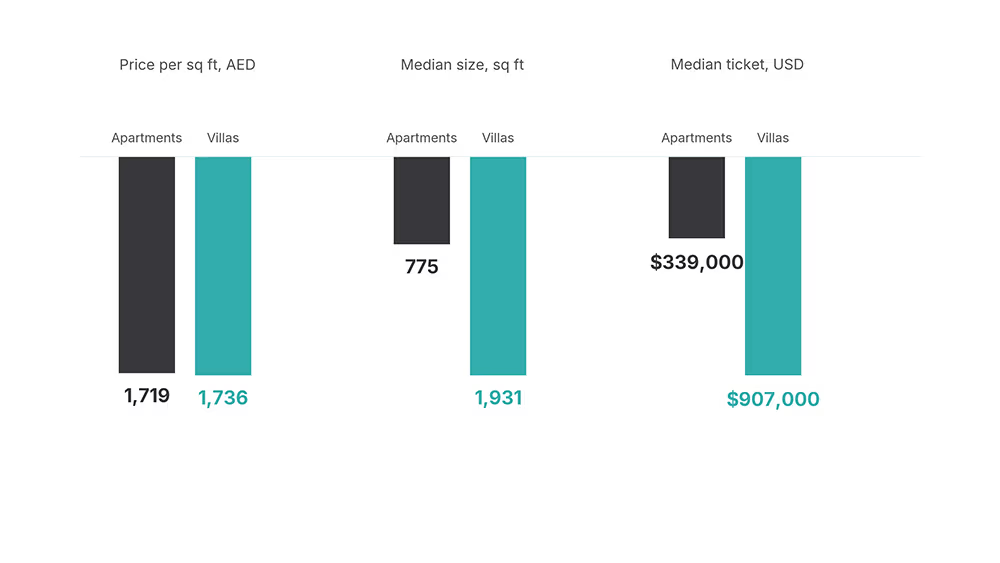
Apartments out-yield villas and townhouses by more than two percentage points, and the reason is size. A villa costs almost exactly what an apartment costs per square foot. It simply asks you to buy two and a half times more of them, and rent does not scale at the same rate as floor area.
Dubai property ROI by type: price per square foot against entry cheque
Before comparing any two yields, check which label the unit was registered under. It sits on the title deed rather than the brochure, and it decides how the running costs are built.
Apartment ROI in Dubai: The Yield Engine
Seven of every ten apartments sold this year were studios or one-bedrooms. The cheque drives the yield, and the clearest way to watch it work is to hold the product still and move the postcode.
A one-bedroom of roughly 800 square feet sold in 2026 at a median of USD 297,000 in Jumeirah Village Circle, USD 408,000 in Dubai Marina and USD 503,000 in Business Bay. Near-identical floor area. Nearly double the price from one end to the other.
One-bedroom apartment ROI in JVC, Dubai Marina and Business Bay
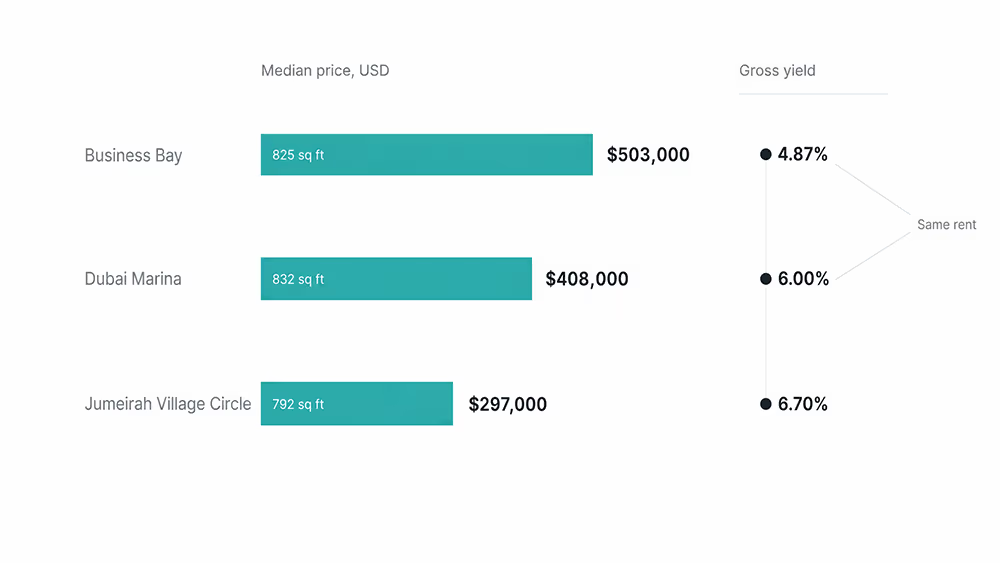
The yields fall in step with the cheque. Pairing sale prices against new tenancies in the same district gives 6.70% in JVC, 6.00% in Dubai Marina and 4.87% in Business Bay. The interesting part sits between the last two: both let for the same money, a median of AED 90,000 a year, while Business Bay costs 23% more to buy.
Marina is also the district correcting hardeVilla ROIst : Marina apartments traded at AED 1,828 per square foot across the first seven months against AED 2,204 for 2025, on 940 sales this year and 3,295 last. How those three districts compare on everything other than yield is set out in our review of the strongest areas for 2026.
Volume follows the cheap end. JVC registered 2,668 one-bedroom sales in the period. Marina registered 410.
The yield ladder inside one district: JVC in 2026.
The ladder crosses the boundary between property types without a break. A three-bedroom villa in JVC pays less than a two-bedroom apartment on the same streets, and more than the four-bedroom villa beside it.
An apartment suits an investor who wants income now and a short queue at the exit. Avoid it if you want a quiet holding, because this is where new supply lands first.
- Numbers: 65,534 sales in seven months, median AED 1,719 per ft²
- Entry point: a studio runs from USD 193,000 in JVC to USD 304,000 in Business Bay
- Who rents here: young professionals, small families, relocating staff
- Exit and liquidity: the deepest resale market in the city
- Fits: an investor optimising for income now and speed of exit
Villa ROI in Dubai: The Appreciation Play
Villas have repriced almost three times faster than apartments since 2019 — up 150% per square foot against 48%.
The yield sits lower because the price ran four times further than the rent. Between 2019 and 2026 the median new tenancy on a Dubai villa moved from AED 135,000 to AED 180,000 — a third higher. Price per square foot moved 150% across the same years.
Villa investment in Dubai: price per square foot since 2019
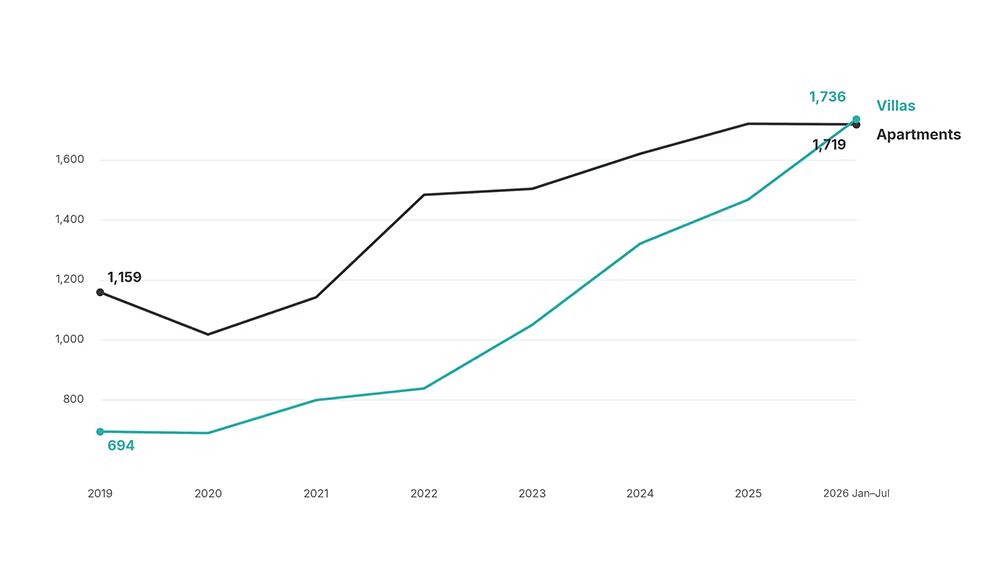
Property Monitor's community figures for April 2026 run from 5.66% in Jumeirah Golf Estates down to 3.99% in Arabian Ranches. The oldest communities sit lowest. Their repricing happened years ago.
Two things the headline hides. The service charge misleads: a villa community bills for roads, landscaping, gates and lighting, so the rate per square foot reads light beside a tower. It does not bill for the garden, the pool, the cooling or the roof, and none of those scale with floor area. And the product is shrinking.
"The new villa always looks cheaper. This year a completed villa sold at a median of USD 1.03 million against USD 812,000 off-plan, so buyers reach for the second. Then we measure it: 1,553 square feet against 2,641, and 25% more per square foot. My rule with clients is to compare the foot before the cheque. On these numbers the cheaper villa is the smaller and the dearer one."
So what counts as the best villas for property investment in Dubai turns less on the community than on how much of that second bill you priced in, and on whether you compared like with like. A villa suits a long horizon and no need for the income. It punishes anyone who may have to sell quickly: the buyer pool is a tenth of the one waiting for apartments.
- Numbers: 7,465 sales in seven months, median AED 1,736 per ft²
- Entry point: three and four bedrooms are 69% of the market
- Who rents here: families on multi-year leases, school catchment demand
- Exit and liquidity: one villa sale for every nine apartment sales
- Fits: an investor holding for the asset rather than the income
Townhouse ROI in Dubai: The Middle Ground
A townhouse in Dubai is a product the registry does not name. It gets filed as either a flat or a villa, and what it earns and what it costs to hold follow the label rather than the house you walked through. Buyers arrive with a printed yield table and ask why our townhouse number differs from theirs. It does not differ. The table was never measuring their building.
That label changes four things:
- What the service charge budget covers. Under Dubai Law No. 6 of 2019 on jointly owned real property, an owner's share is set by the ratio of the unit's area to the total, at a rate RERA approves and Mollak invoices. Towers and villa communities both sit under that regime; the budget behind it does not. A tower's carries lifts, corridors and district cooling for common areas. A villa community's carries roads, landscaping and security, and leaves the house itself with you.
- What the title covers. A property registered as a villa normally carries its plot. Every townhouse we identified is registered as a unit, so the deed covers the unit and a share of the common property rather than land.
- Who buys it from you. Unit-registered stock is priced and searched against apartments. Villa-registered stock competes with villas.
- What the published yield was measuring. Neither figure was measuring your unit.
The label also stretches an enormous distance. Among the units we could identify, International City traded at a median of AED 464 per square foot and Dubai Hills Estate at AED 2,620 — five and a half times apart, under one word. Dubai Creek Harbour, another address on that list, sits nearer the top.
Townhouse prices by district, from International City to Dubai Hills Estate
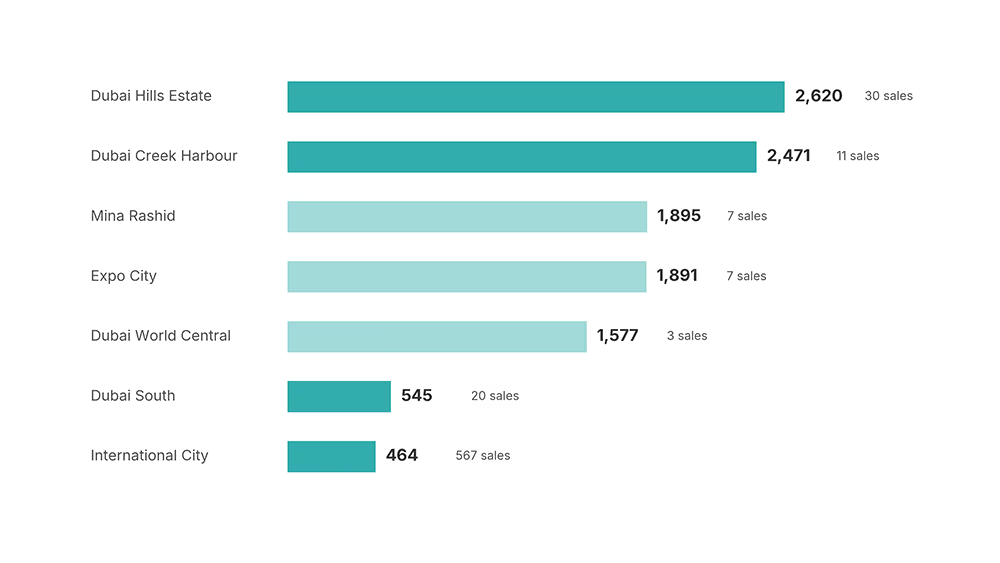
On the ticket the middle ground holds up: a median of USD 447,000 sits between the apartment at USD 339,000 and the villa at USD 907,000. The product is consistent too, with 631 of the 645 identifiable sales at three bedrooms. And it is young. The first townhouses appear in 2017 in Dubai South; volume arrives only in 2021 through International City. The registry is older than the product, which is why it has no column for it.
A townhouse suits a buyer who wants villa space at a smaller cheque and can sit through a slower exit. It is the wrong asset for anyone comparing returns on a spreadsheet, because the line being compared does not describe the building.
- Numbers: not separately recorded — filed as flat or villa
- Entry point: USD 447,000 median, between a large apartment and a small villa
- Who rents here: families wanting space without villa running costs
- Exit and liquidity: set by registration type rather than by the product
- Fits: a buyer who reads the title deed before comparing the yield
Where Do You Find High ROI Property in Dubai?
The highest yields sit in the cheapest stock. In April 2026 Property Monitor recorded 8.53% in Dubai Investments Park and 8.23% in Dubai Sports City against 5.73% in Downtown Dubai — nearly three points of spread inside one city and one property type.
The search for the best ROI property in Dubai keeps ending in the same handful of communities, and that concentration is itself the finding. Entry price does almost all the work.
As it rises:
- the yield falls, because rent does not climb in step with capital value;
- the service charge per square foot usually rises, widening the gap between gross and net;
- the price grows less sensitive to whatever is built next door;
- the pool of buyers waiting at resale narrows.
The first two work against you. The last two work for you. A high headline yield is payment for accepting the first pair. Where those trade-offs land district by district is set out in our comparison of the top twenty areas, and a lower-cost entry is examined in our Azizi District review.
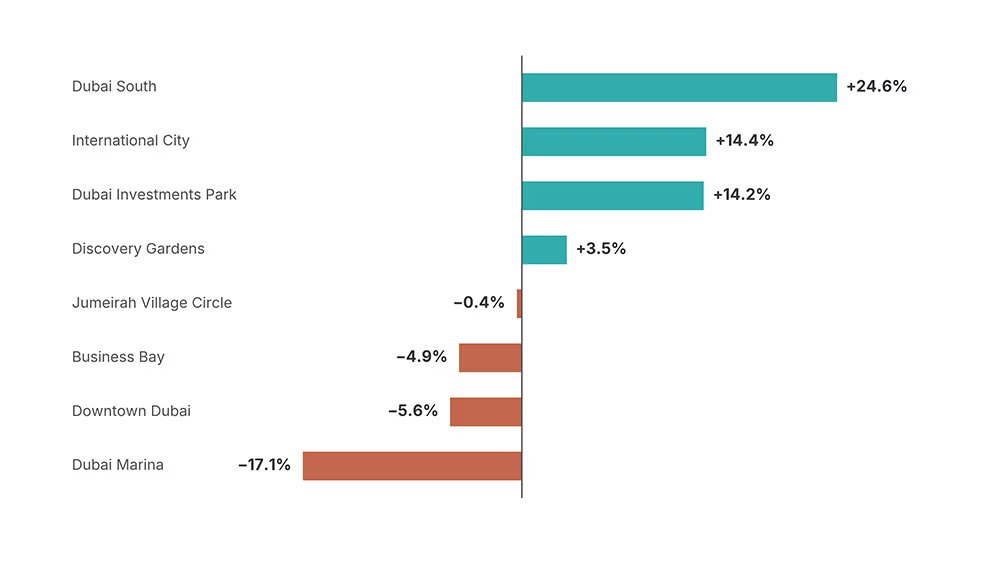
In 2026 the two ends of the market moved in opposite directions. Dubai South apartments rose 24.6% per square foot against 2025. Dubai Marina fell 17.1% over the same months. The high-yield end gained price alongside income. The prime end gave some back.
Best ROI districts in Dubai: price movement from 2025 to 2026
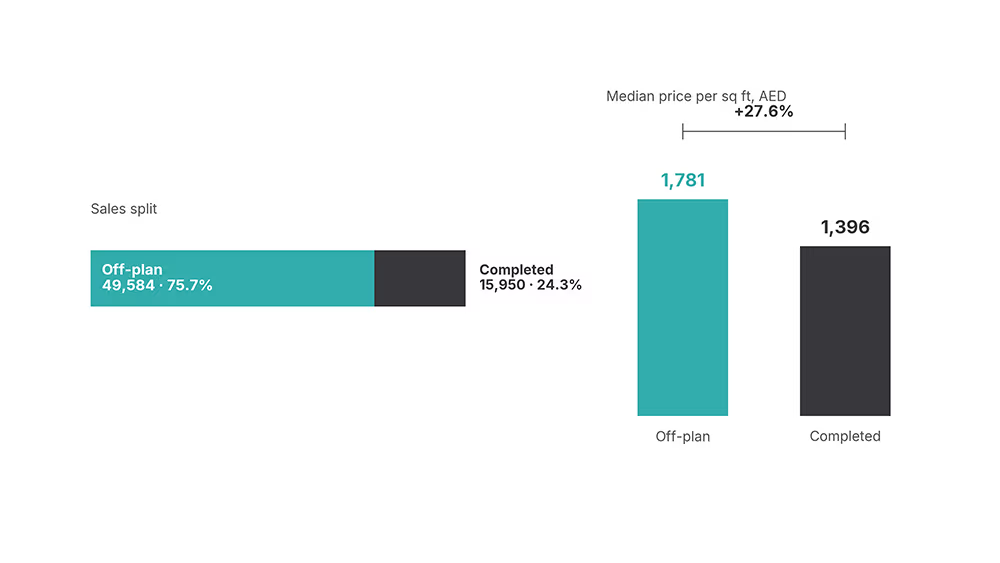
The number that surprised us most sits here. Three of every four residential purchases this year were off-plan: 54,026 pre-registration sales against 16,637 sales of completed property. And the unbuilt product carries the higher price, by 27.6% per square foot. Some of that is composition, since off-plan stock is newer and sits in newer districts. What does not survive the data is the idea that off-plan is the cheaper way in. The instalment is smaller. The property is not. Our off-plan listings set out the payment structures behind that gap.
Off-plan against completed apartments: sales and price per square foot
One deduction almost never appears in a yield table. More than half of Dubai's tenancy contracts are renewals — 100,835 against 87,520 new lettings in 2026 — and renewals sit 16% below the open market, at a median of AED 67,100 against AED 80,000. A landlord whose tenant stays collects the lower figure, and rent caps are what keep it there.
Read the same number a second way. Completed property accounted for a quarter of all transactions. In a market where three quarters of the activity sits in buildings that do not yet exist, your exit depends on how many of them get finished, and when.
Before taking a high yield, name what you are giving up. If you cannot name it, the number is not yet an investment case.
Luxury Property ROI in Dubai: When the Premium Pays
Luxury property investment in Dubai answers a question about capital, not about monthly income. Downtown apartments returned 5.73% in April 2026, the lowest of the districts investors ask about most, and prime stock generally sits at or below that line.
What the segment has done instead is hold a much longer curve. Palm Jumeirah apartments traded at a median of AED 1,096 per square foot in 2019 and AED 3,642 across the first seven months of 2026. Volume moved the other way: 1,101 sales in 2025, 515 in the same partial year. Fewer transactions at higher prices reads as scarcity on the way up and as illiquidity on the way down.
That thinness is the risk, and it is rarely stated aloud. A market of a few hundred sales a year gives you a narrow buyer pool, long marketing periods and prices set by individual deals rather than by an index. While values climb, this works in your favour. When they stop, there is nobody to sell to quickly. Knight Frank and CBRE both track the prime pipeline that governs it.
Luxury suits an investor whose horizon runs in years rather than quarters, who does not need the income, and who can hold through a slow exit. It is a poor fit for anyone funding the purchase from the rent, or working to a date they cannot move.
"I run this comparison with nearly every client. Take USD 450,000. In Jumeirah Village Circle that is a two-bedroom apartment of about 1,230 square feet. In International City the same money is a townhouse of 2,384 square feet — close to twice the floor area. The villa most people picture, in that same JVC, has a median of USD 914,000, so it is a different conversation. What usually settles it is the last number: 673 two-bedroom apartments changed hands in JVC in seven months, against 24 of those townhouses. Space is cheap in Dubai. Buyers for it are not."
Which Dubai Property Type Fits Your Goal?
Three goals, three answers, and none of them is a ranking.
- Income now. A studio or one-bedroom apartment in a mid-market community. You accept faster tenant turnover and a segment where new supply arrives first.
- Capital over a long horizon. A villa, bought on the understanding that most of the repricing since 2019 has already happened and that the exit takes time.
- Balance. A townhouse, provided you read the title deed first and price the running costs that come with whichever label it carries.
Whichever of the three you sit closest to, the homework is identical: establish what the unit is registered as, what it will actually cost to hold, and who will be waiting when you sell.
FAQ
Which property type has the highest ROI in Dubai?
Apartments, and within them studios and one-bedrooms. The mechanism sits in the entry price rather than the building: rent does not rise in step with capital value, so the smallest cheque returns the largest percentage. In exchange you accept faster tenant turnover and a segment where new supply arrives first.
Do villas or apartments make a better investment in Dubai?
Neither wins in the abstract. Apartments pay more today; villas have repriced faster and tend to be held longer. The decision that usually matters is the exit — Dubai registers roughly nine apartment sales for every villa sale, so a villa asks you to accept a narrower market on the way out. Where you buy changes the answer as much as what you buy, and our review of the strongest districts for 2026 works through both.
Is luxury property in Dubai a good investment?
Luxury real estate investment in Dubai is a capital decision taken with the income switched off. Prime yields sit at or below the lowest of the districts investors ask about, and the segment trades on a few hundred sales a year, which supports prices while the market rises and leaves few buyers when it does not. Whether Dubai luxury property investment potential justifies the entry price depends on your horizon and on whether you need the rent.
What rental yield can I expect from a townhouse in Dubai?
No published figure describes a townhouse, because the registry does not record one. Any number you have been shown was drawn from villas, apartments, or the two averaged together. Ask which label the unit carries on its title deed, then compare it against that category rather than against a townhouse average that does not exist.
How much do service charges reduce your rental yield in Dubai?
Service charges, maintenance, management and vacancy together take roughly 1.5 to 2.5 percentage points off a gross yield. The deduction is built differently by type: an apartment is billed per square foot through the building's owners association, while a villa's charge covers the community and leaves the garden, pool, cooling and roof with the owner. Two properties quoting the same gross yield can net very different amounts.