Which Dubai Premium Projects Are Actually Worth the Price? Comparing Sobha, Ellington, SAAS, OMNIYAT and IMAN

Not every premium project in Dubai is a strong investment. Some justify a higher price through location, master-planning, scarcity or long-term demand. Others are simply more beautiful — and that is not the same thing.
This article compares Sobha, Ellington, SAAS, OMNIYAT and IMAN to show what kind of value each developer really creates, where the premium may be justified, and what investors should verify before paying for it.
What Makes a Dubai Residential Project Premium?
In Dubai, the word «premium» is used for very different products. It may describe a master-planned community, a rare waterfront residence, a branded luxury project, a design-led apartment building — or simply a project launched at a visibly higher price than its surroundings. For investors, these are not the same thing.
The city’s own development agenda makes this distinction more important. The Dubai 2040 Urban Master Plan prioritises service centres that are easier to access through flexible and sustainable mobility. The Blue and Green Spaces Roadmap 2030 goes further: it targets around 1.5 million new trees, 120 parks covering nearly 3 million sqm, and 200 sports and recreational spaces by 2030. This does not turn every greenery-led project into a stronger investment, but it does explain why urban quality, open space and daily liveability deserve closer attention.
At Mint Elite Real Estate, we use six filters to understand what kind of premium a project is asking buyers to pay for.
A premium story becomes relevant for investors only when it can be tested against evidence. A strong concept may deserve attention; a higher price still needs to be checked against transaction context, rental logic, district maturity and future exit depth. The Dubai Land Department’s Real Estate Data portal is the public starting point for that work: it covers transactions, rents, projects, units and developers.
«Premium is often mistaken for visual richness. A striking lobby or expensive bathroom can make a project memorable, but they do not explain the whole price.
Sobha Hartland II is a useful counterexample: its value is less about decorative excess inside the apartment and more about the scale of the community, water, greenery and the wider living environment being built around it. That kind of premium behaves very differently from a project where most of the uplift sits in finishes and mood.»

Developer Positioning in Dubai: Five Ways to Create Residential Value
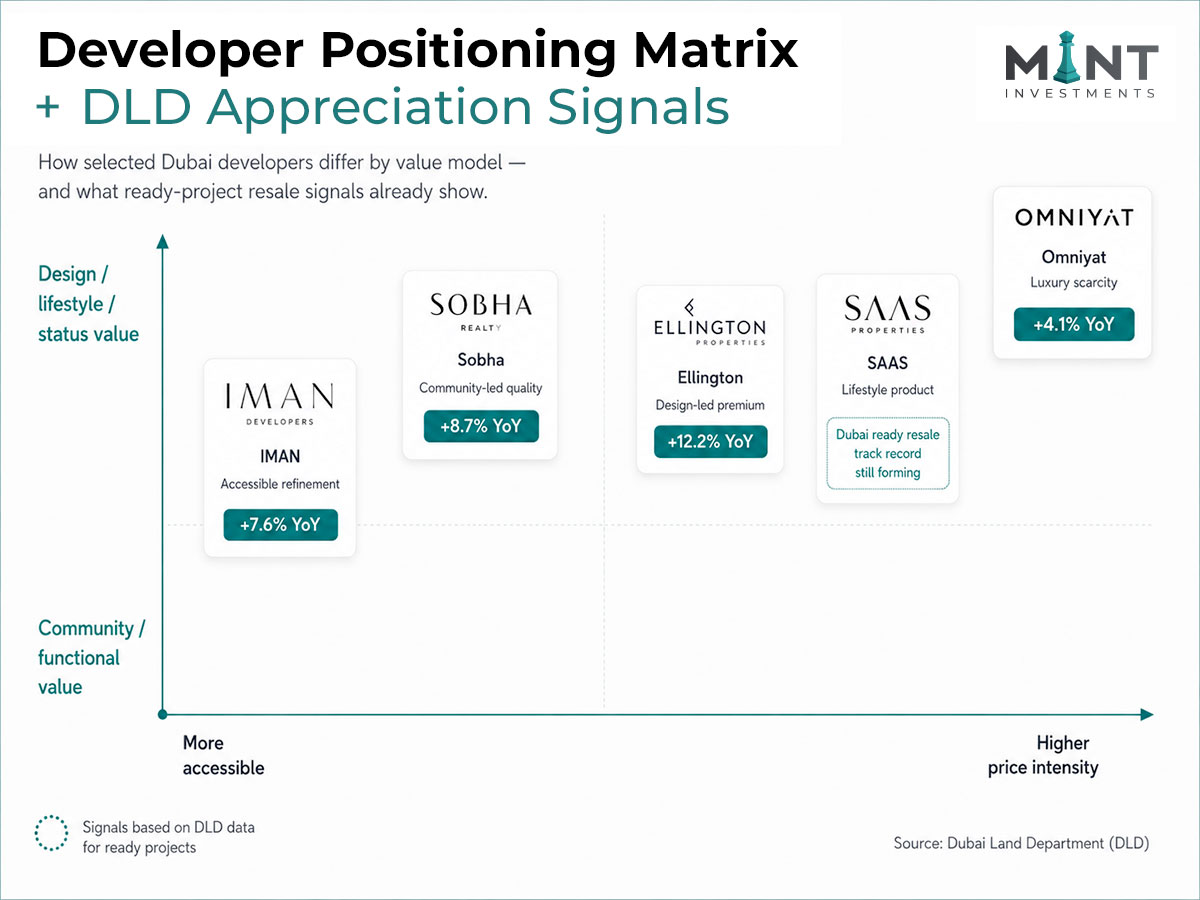
Dubai’s premium residential market has enough depth to reward very different value models. In Q1 2026, total real estate transactions reached AED 252 billion, while investment in luxury property rose to AED 87.71 billion. This makes developer positioning commercially meaningful: buyers are not responding to one generic version of «premium», but to different combinations of community, design, scarcity, lifestyle and pricing power. At Mint Elite Real Estate, we estimate the five developers in this article through two layers: what kind of value they create — and whether completed stock already shows signs that the market recognises it.
Five Top Dubai Developers Compared
«The most useful developer comparison starts after handover, when the market shows what it is still willing to pay for. In our DLD check, completed Ellington projects showed the strongest appreciation signal in the sample, while selected Sobha Hartland projects also moved higher.
These are different stories: in one case, buyers keep rewarding design that stays recognisable on the resale market; in the other, they pay for a community proposition that feels more complete over time.»
Sobha and Sobha Hartland II: When Premium Comes from the Community
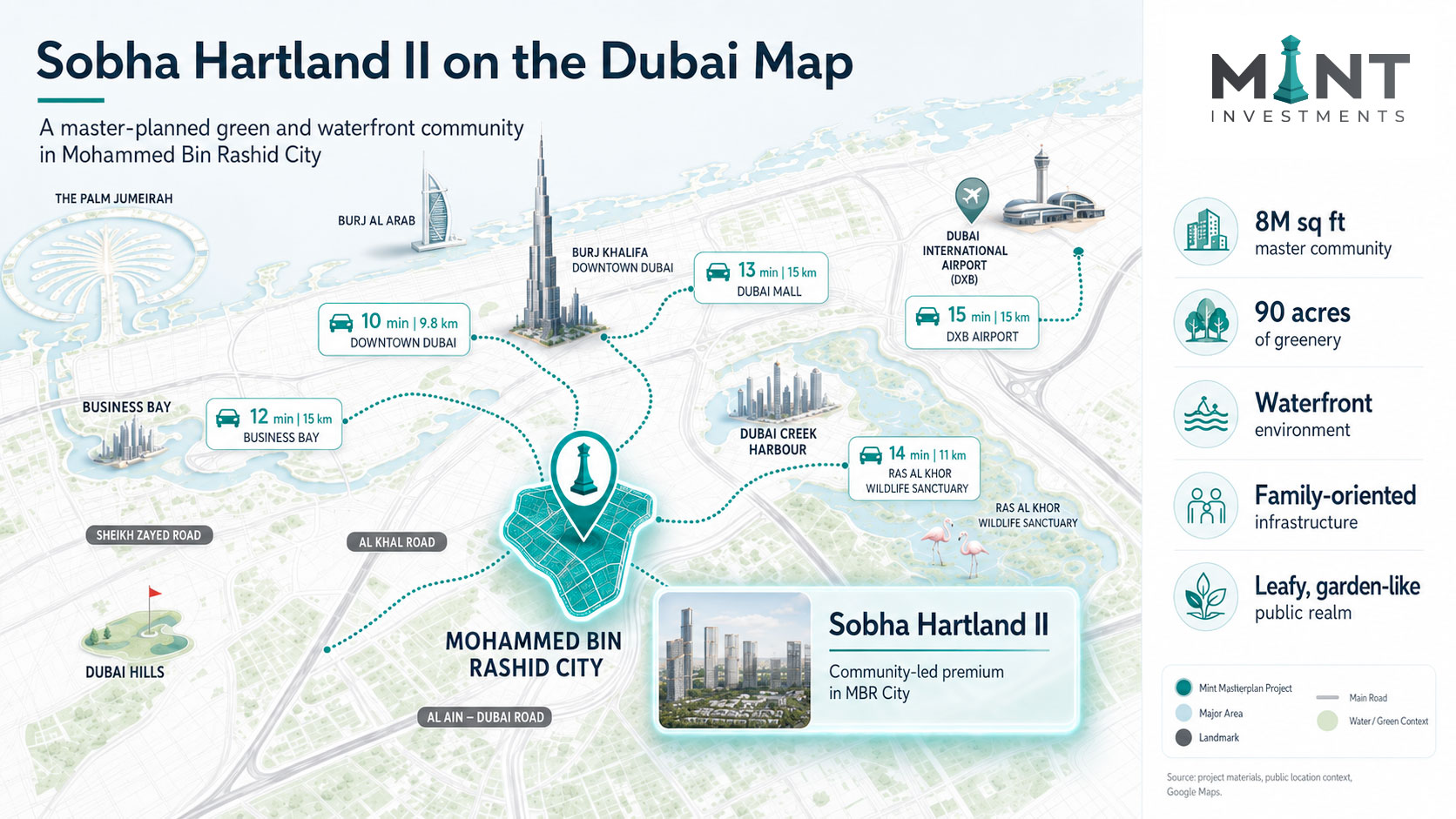
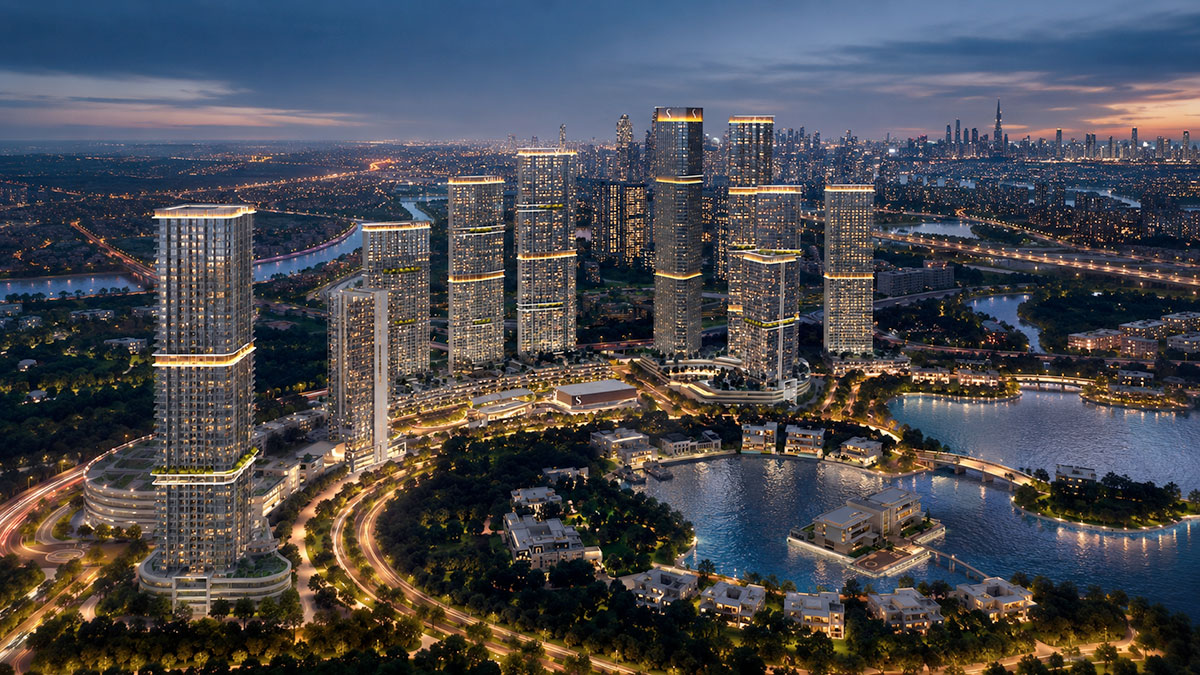
Sobha Realty is easiest to understand through the environment it builds around the home. Sobha Hartland II makes that approach especially visible: the project is conceived as a large residential community in Mohammed Bin Rashid City, where the premium comes from the district itself — greenery, water, family infrastructure and a more carefully composed public realm.
According to project materials, Hartland II spans 8 million sq ft, includes 90 acres of open space and greenery, and combines villas with apartment clusters such as Riverside Crescent, Skyscape and Skyvue. That scale matters because Sobha is not selling a single visual gesture. It is shaping a broader living setting that buyers can read as a whole.
Why Sobha Hartland II stands out
Sobha Hartland II is one of the clearest examples of community-led premium in Dubai because several layers of value work together:
- A district-scale residential idea. Villas, apartment towers and shared public spaces are organised as one wider environment, not as isolated product launches.
- Water woven into the identity of the project. Lagoons, waterfront edges and promenades give the community a recognisable spatial character.
- Greenery with a softer, more garden-like feel. One detail Mint Elite Real Estate’s team pays attention to is Sobha’s use of leafy shade trees alongside palms. It creates a denser, calmer landscape language — more lawn, canopy and garden atmosphere, less postcard-style tropical staging.
- Public realm at human scale. Landscaped edges, shaded walking routes and social pockets matter because they shape the part of the project residents experience every day, not only what appears in aerial renders.
A mix of housing formats within one ecosystem. Larger villas, family-oriented residences and high-rise apartment clusters broaden the audience without dissolving the community concept.
A community model Sobha has already tested
Hartland II builds on a model Sobha has already brought into daily life.
The original Sobha Hartland includes established education infrastructure inside the community: Hartland International School and North London Collegiate School Dubai both operate there. Their presence matters because they turn the masterplan into a more convincing family proposition — schooling, daily routines and residential demand begin to reinforce one another.

Sobha’s community thesis is also supported by a broader execution story. In 2026, Dubai Municipality and Sobha Realty launched the 70–70 Strategy, targeting 70% off-site construction and 70% factory automation by 2030. This does not turn every Sobha project into a stronger investment by default, but it does reinforce the brand’s emphasis on systems, construction control and repeatable delivery quality.
For investors, Sobha is most compelling when the project is read through the durability of the environment it creates: whether the district can keep attracting end-users, whether the public realm matures convincingly, and whether the community feels as carefully considered on the ground as it does in the masterplan.
With Sobha, the quality reveals itself once you stop looking only at the unit. Hartland II feels crafted as a place: water, lawns, leafy shade trees, walking routes and social spaces are doing real work together. That matters. A future buyer may first notice the apartment, but they often decide emotionally on the district around it.
Ellington and The Highgrove: Design-Led Premium in an Earlier-Stage Location
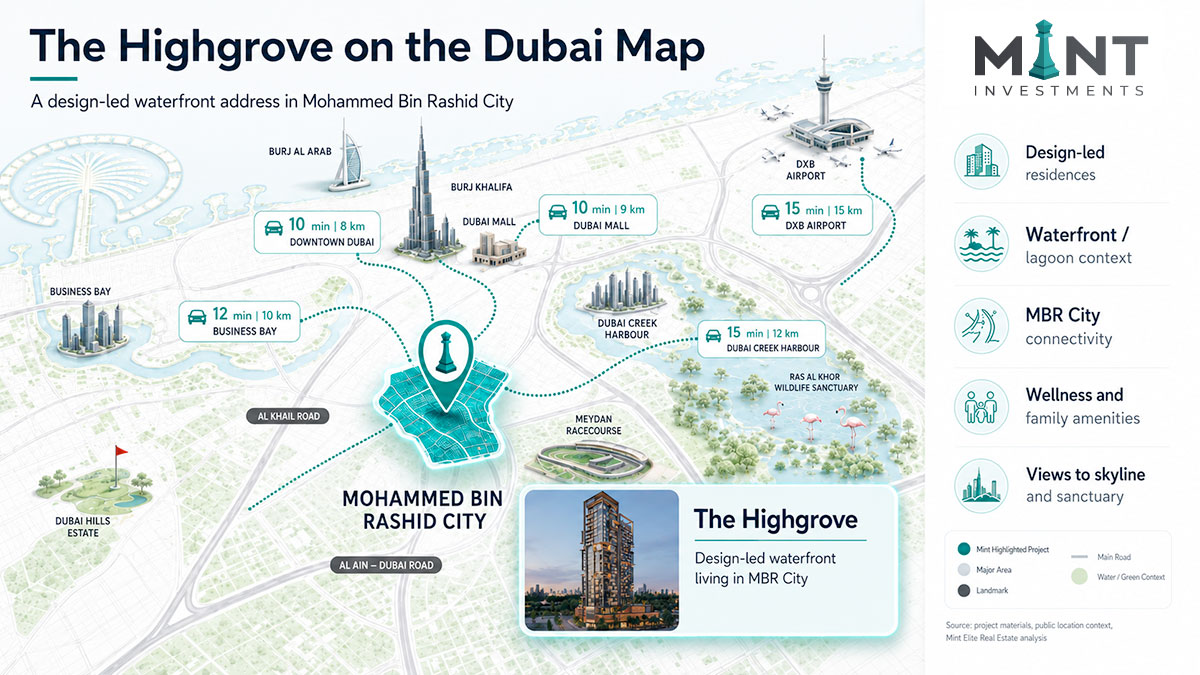
Ellington’s premium is easiest to read at the scale of the building itself: the arrival sequence, the layouts, the material palette, the amenities and the mood the project creates for residents. The Highgrove brings that approach into Meydan Horizon within Mohammed Bin Rashid City — a location where the product already has a clear identity, while the surrounding district is still moving towards maturity.
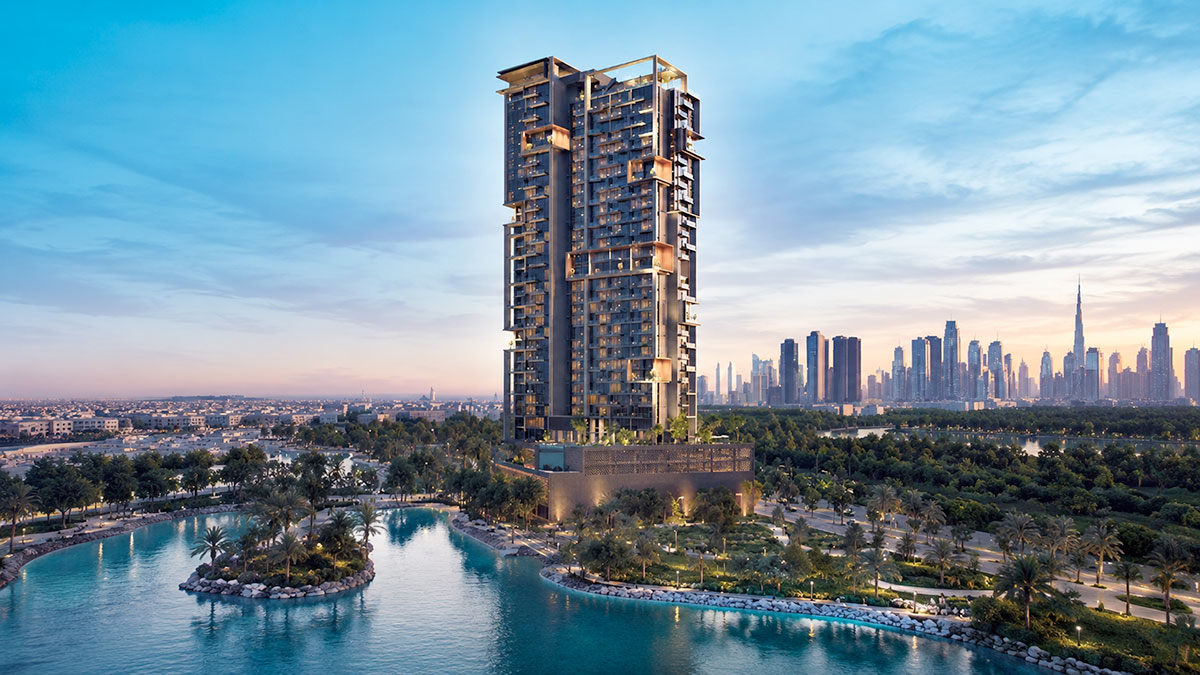
According to project materials, The Highgrove is positioned around a lagoon-facing residential experience, with apartments, duplexes, penthouses and sky villas, supported by a more curated amenity layer than a standard tower launch. That makes it a useful case for investors: the strength of the product is visible early; the strength of the location will depend on how convincingly Meydan Horizon develops around it.
Why The Highgrove stands out
The project reflects Ellington’s design-led model through several specific choices:
- A residence-first design language. The emphasis is on atmosphere, materials and the emotional quality of the home, rather than on sheer scale.
- Lagoon-facing positioning. Water views and a softer waterfront setting are central to the project’s identity.
- Amenities designed as part of the lifestyle proposition. Project materials highlight a sky dining and viewing deck, clubhouse, cinema and media room, indoor and outdoor fitness spaces, and leisure areas shaped for both social use and everyday retreat.
- A broader mix of unit formats. Apartments, duplexes, penthouses and sky villas widen the appeal beyond a single buyer profile.
- A strong building in a district still forming. The Highgrove already reads as a distinctive product; its longer-term investment story will also depend on how Meydan Horizon matures into a lived-in address.
Ellington’s premium is visible in the residential experience itself — calmer interiors, stronger spatial composition and a more considered material language.
A strong product with infrastructure beginning to catch up
The Highgrove’s location story should be read with precision. Meydan Horizon remains an emerging district, but its wider access infrastructure is no longer only a future promise. The Ras Al Khor Road corridor upgrade increased capacity to 10,000 vehicles per hour and reduced travel time on the route from 20 minutes to about 7 minutes. The Roads and Transport Authority specifically identifies Meydan Horizon among the major development areas served by the project.
For an investor, that matters because design-led projects in developing locations need two things to work together: a product strong enough to stand out on its own, and an urban context that becomes easier to live in, reach and understand over time. The Highgrove already has the first. The second is now supported by real infrastructure progress, though the district itself still has further maturity ahead.
«The Highgrove is a good example of Ellington’s strength: the residence is already doing a lot of work through layout, atmosphere and amenity design. A sky dining deck, lagoon-facing views and carefully composed shared spaces make the product easy to want. The investor’s question sits one level further out — how quickly Meydan Horizon turns that strong building into an equally convincing address.»
SAAS Hills: A Strong End-User Product with a More Demanding Investment Case
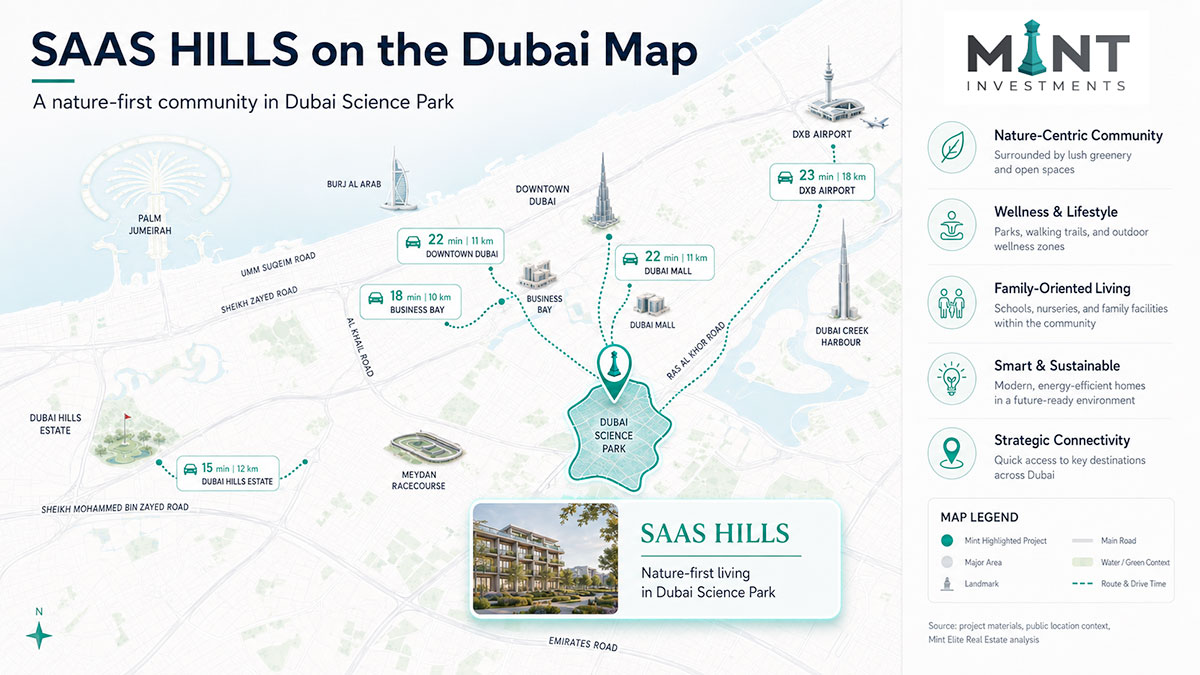
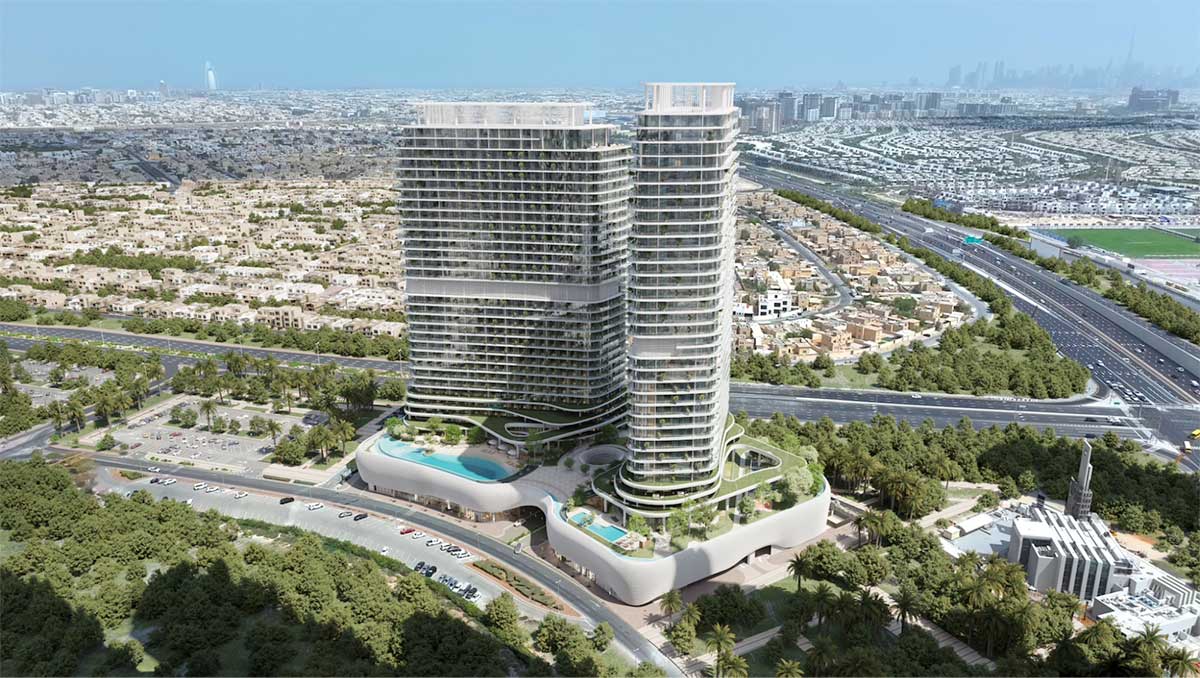
SAAS Hills stands out as a more lifestyle-intensive residential product: larger formats, a stronger wellness layer, expressive shared spaces and interiors designed to feel noticeably more individual than a standard upper-mid apartment launch.
Located in Dubai Science Park, the project is especially easy to understand from an end-user perspective. It speaks to buyers who care about how a home feels in daily use — space, atmosphere, privacy, wellness and amenities — rather than treating the unit only as a financial instrument. Dubai Science Park is officially positioned as a life sciences and innovation district in Al Barsha South.
For Mint Elite Real Estate, this is what makes SAAS Hills interesting — and why it deserves a more selective investment reading. The product is easy to admire. The harder question is whether a future buyer will pay for that same lifestyle premium on resale.
Why SAAS Hills stands out
Several features give the project a more distinctive end-user profile:
- A wider residential format. The project includes apartments, townhouses, duplexes and sky-villa layouts, creating a broader, more ambitious product range than a standard premium tower.
- Wellness as a central idea. The amenity story is unusually prominent, with spa-oriented spaces and a stronger focus on recovery, privacy and retreat.
- A more expressive spatial identity. Public areas and interiors are designed to feel memorable, with stronger visual drama than a conventional upper-mid residential scheme.
- Larger, more lifestyle-led homes. Mint’s expert review points to more generous apartment planning, well-organised kitchens and bathrooms treated as a visual feature in their own right — including a warmer, more expressive material palette than is typical for investor-led stock.
A practical rather than status-led location. Dubai Science Park sits in a functioning Al Barsha South district, with access to the wider Dubai Hills side of the city. That makes the project easier to read through everyday usability than through prestige alone.
Why the product story is credible — and where the investor test begins
SAAS is not building this premium vocabulary from scratch. In 2025, the developer unveiled The Ritz-Carlton Residences, Al Maryah Island during Abu Dhabi Finance Week; the same announcement referenced earlier launches of The St. Regis Residences, Al Maryah Island and Seamont, Autograph Collection Residences in collaboration with Marriott International. That gives the brand a more credible connection to high-end hospitality-led living than a single Dubai launch would suggest.
This context helps explain SAAS Hills. Its stronger interiors, wellness orientation and high-touch residential mood are part of a wider developer trajectory. Still, the investment case needs a stricter price conversation than the end-user case. A buyer who plans to live there may value every extra layer of comfort directly. An investor has to ask a narrower question: will the resale market value those same details enough to support the entry price?
«SAAS Hills is the kind of project that can make immediate sense to someone buying for themselves. The apartments feel larger, the amenity layer is unusually immersive, and even details such as the kitchens, bathrooms and spa spaces are designed to be noticed. For an investor, I would narrow the discussion to one issue: how much of that lifestyle premium is likely to be recognised again on exit?»
The Lana by OMNIYAT and The Grove by IMAN: How Premium Changes Across Price Tiers
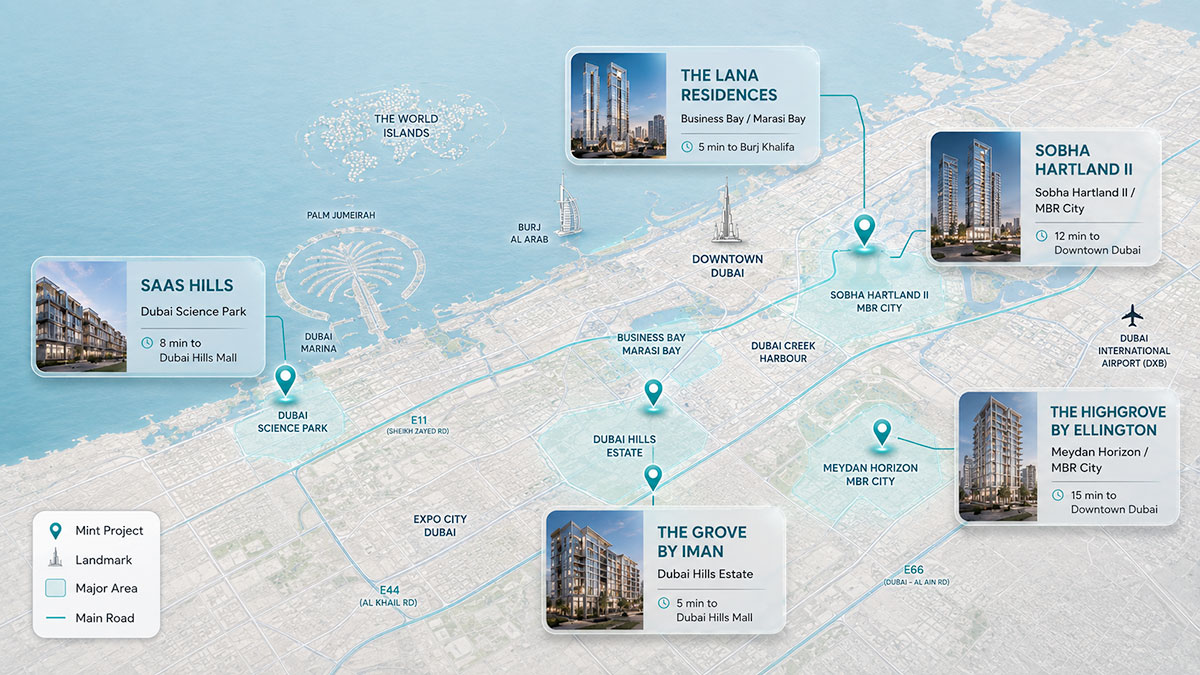
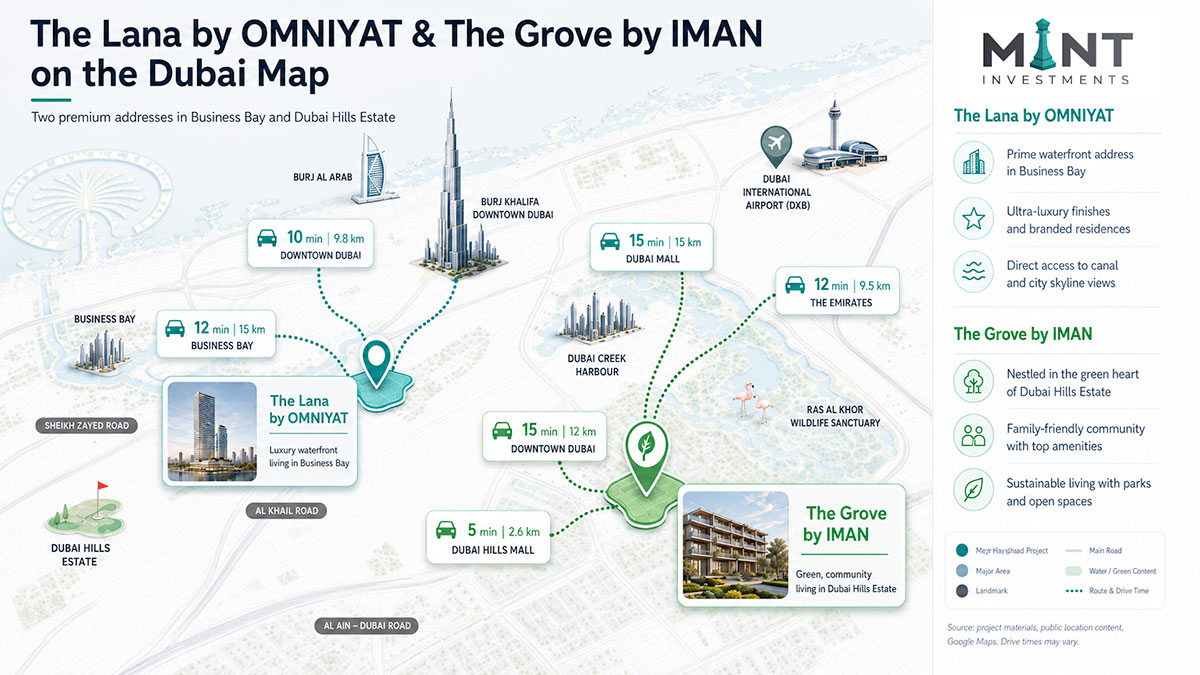
The Lana Residences and The Grove by IMAN help mark the range of what «premium» can mean in Dubai residential real estate. The Lana sits in the ultra-prime category: architectural authorship, very limited supply, branded hospitality and a waterfront central location. The Grove works at a far more accessible level, using scale, amenities and residential polish to create a noticeably more considered product within Dubai Hills.
The Lana by OMNIYAT: rarity, architecture and branded service
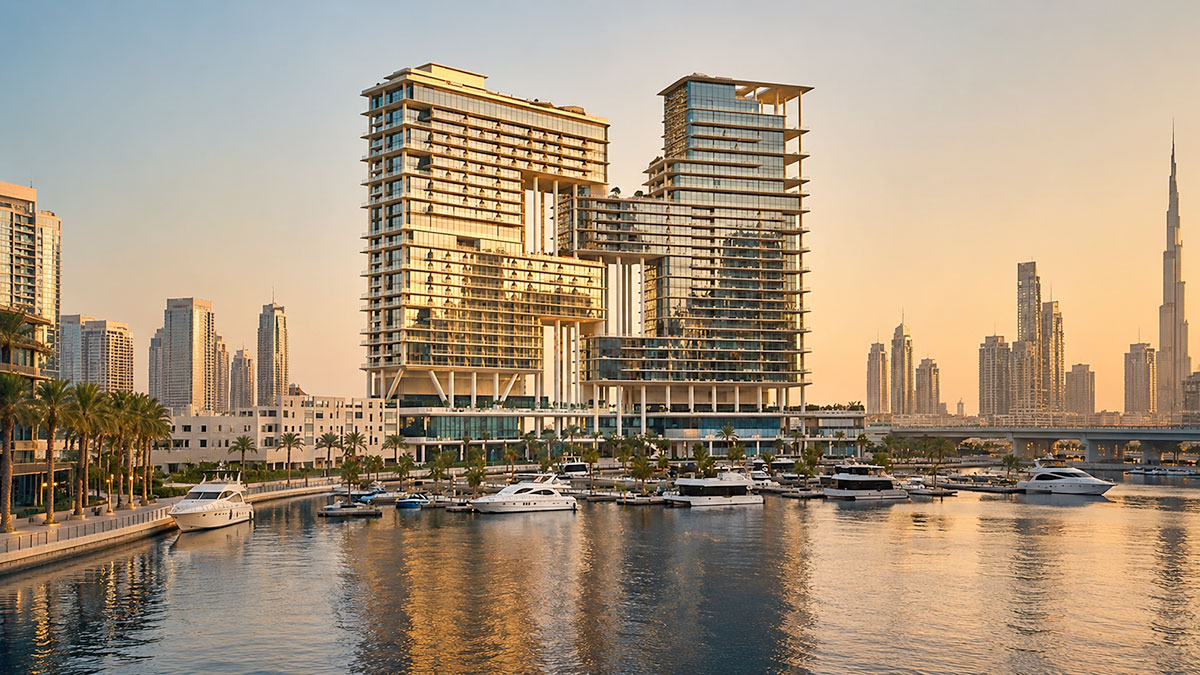
The Lana Residences, Dorchester Collection is a residential product built around scarcity. Commissioned by OMNIYAT, designed by Foster + Partners and managed by Dorchester Collection, it sits on the edge of Marasi Marina, between Downtown Dubai and Dubai Design District.
Its premium is unusually concentrated:
- Only 39 residences across the residential tower;
- Large-format homes, with standard residences ranging from 3,900 to 10,000 sq ft;
- Architecture by Foster + Partners and interiors by Gilles & Boissier;
- Dorchester Collection management, which adds a service layer beyond the unit itself;
- A central marina setting tied to the Burj Khalifa District and Downtown Dubai.
The Lana belongs to a narrow segment where the buyer is underwriting rarity, recognisability and status. The asset is expected to hold appeal because there are very few close substitutes: a limited number of residences, a signature building, a globally known hospitality name and a prime waterfront address.
The Grove by IMAN: a more accessible premium built around residential polish
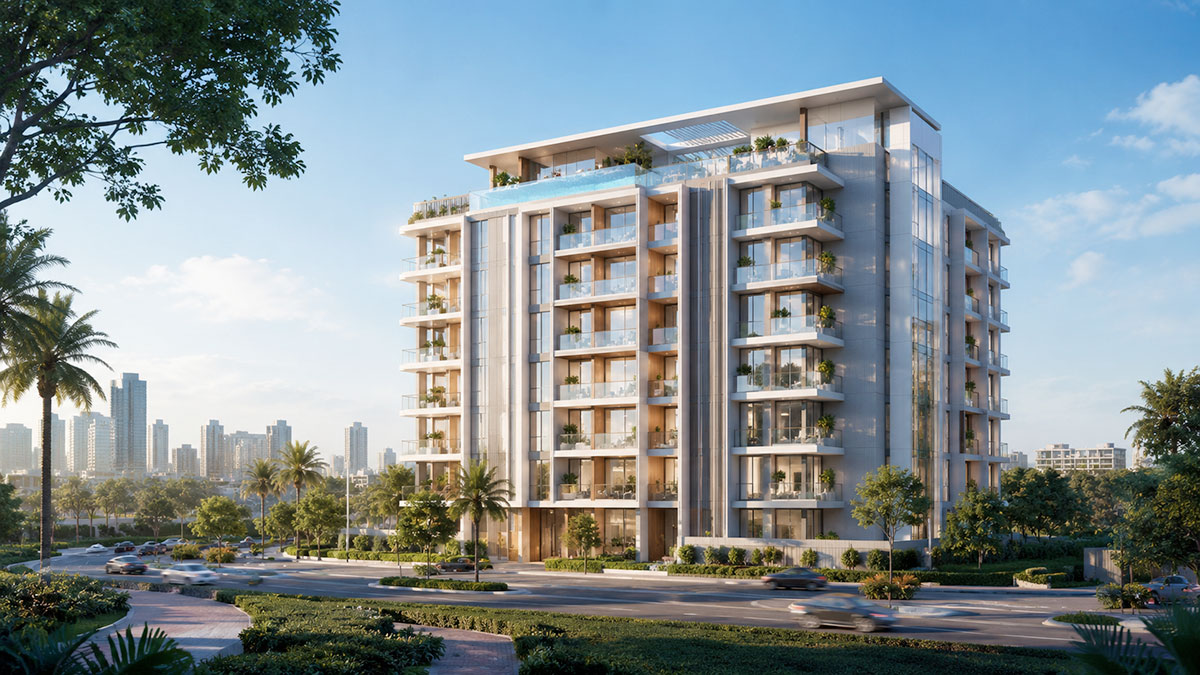
The Grove by IMAN belongs in the comparison for a different reason. It shows how premium can be created without entering the trophy-asset category. Announced as a 121-unit Dubai Hills project with studios, one-, two- and three-bedroom apartments, The Grove is built around a smaller residential format and a more amenity-rich day-to-day experience. Launch coverage also highlighted rooftop leisure spaces, pools and a jacuzzi as part of the project’s proposition.
What matters here is the value package:
- A compact residential scale, which helps the project feel more curated than a large-volume tower;
- Shared spaces that do visible work — rooftop leisure, pool areas and social amenities;
- Dubai Hills positioning, which supports a more lifestyle-led residential story;
- A lower capital threshold than true luxury products such as The Lana, while still aiming for a stronger sense of finish and experience.
The Grove sharpens an important point in the article: premium is not reserved for ultra-luxury assets. It can also come from a project that gives buyers a more polished residential proposition at a materially lower entry level.
«The Lana and The Grove belong to two very different buyer conversations. At The Lana, the premium is concentrated in things that are genuinely hard to replicate: the architecture, the Dorchester service layer, the marina position and the small number of residences. The Grove is more approachable. Its strength is that the project feels carefully packaged for daily life — not extravagant, but noticeably more considered than a standard apartment block.»
Five Things to Remember About Premium Property in Dubai
- Premium can come from very different sources — community quality, design, lifestyle depth, scarcity, branded service or stronger value for the price.
- The strongest premium is easy to explain after the brochure disappears. Sobha Hartland II is legible through community scale; The Lana through rarity, architecture and service.
- Design-led projects need the right context around them. The Highgrove benefits from Ellington’s product strength, while its location story still depends on Meydan Horizon becoming a more mature district.
- A compelling end-user product is not always the cleanest investor case. SAAS Hills stands out for space, wellness and visual richness, but its premium deserves a stricter price discussion.
- The right premium depends on the buyer’s objective. Capital preservation, future use, rental relevance and prestige ownership lead to different project choices.