Abu Dhabi property investment 2026: which area fits your plan?
In the first quarter of 2026 more property money went into Hudayriyat than into any other part of Abu Dhabi, while the people who pay rent were still moving into Al Reem. Transaction value and lived demand are not the same signal, and the gap between them is where investors lose years.
The market has grown fast enough that almost any area can be presented as the right one. This guide takes three — Al Reem, Yas with neighbouring Al Bahiya, and Hudayriyat — and compares them on the two questions brochures leave out: when the demand starts paying, and how long your capital sits before it can.

What drives demand in Abu Dhabi?
Abu Dhabi added around 288,000 residents during 2024, reaching a population of 4.14 million, and just under 45% of its labour force works in white-collar roles. Population growth is the argument most often made for buying here. The second figure is the one that decides who can afford your apartment.
The emirate is the federal capital, and its economy no longer runs on oil alone: non-oil activity accounted for 54% of GDP in the third quarter of 2025. Finance is the part of that mix a landlord should watch. The financial and insurance sector grew 8.5% year on year and now contributes 6.5% of GDP, and ADGM, the emirate's international financial centre, is where much of it sits.
That gives the tenant pool a shape. Professionals in finance, government and professional services rent the homes this guide covers. Hospitality and events staff support Yas. Construction and logistics employ the larger share of the workforce and rent elsewhere. A rising population is not the same as rising demand at your price point.
Dubai answers these questions differently, and the contrast is worth holding while you read on: we set out how the districts there earn their money in our guide to the Dubai market.
How fast is the market moving?
Abu Dhabi's property market grew 112% year on year in the first half of 2026 and slowed by roughly a third inside the same six months. Both statements come from the regulator's own data, and holding them together is the difference between reading a market and reading a headline.
The half-year totals are the part that travels. Transactions reached AED 117bn (US$31.86bn), with sales of AED 86.1bn (US$23.44bn) across 16,838 deals. Foreign direct investment came to AED 13.8bn (US$3.76bn) from investors in 116 nationalities, already past the whole of 2025.
Where the money went
Area-level figures are published quarterly, and the most recent breakdown covers the first quarter.
What the annual figure covers over
Subtracting the first quarter from the half-year shows what the headline hides.
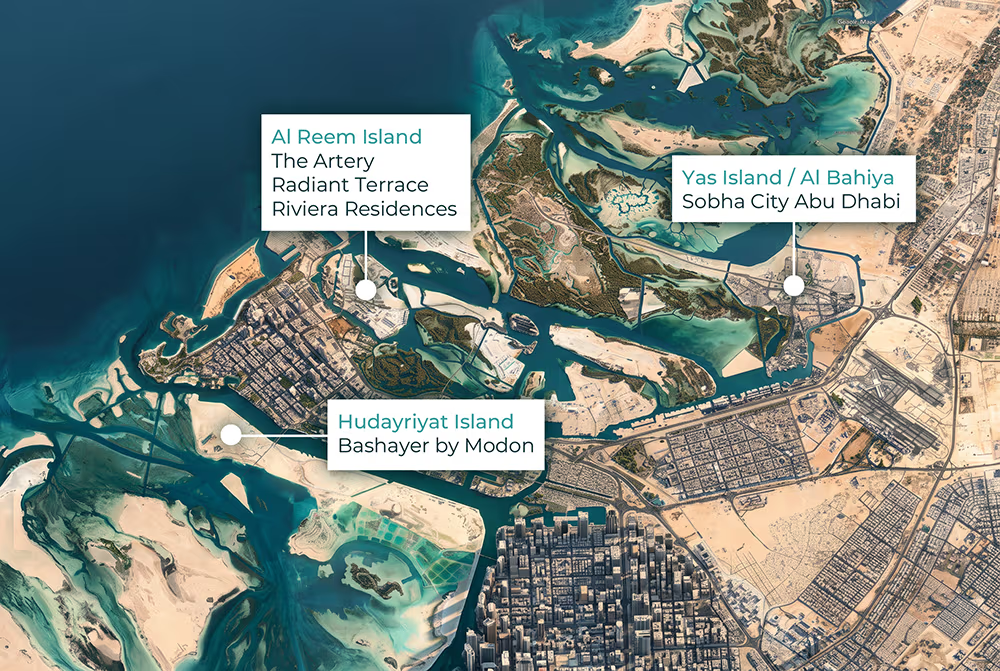
Al Reem Island: The Working District
One developer is building eight towers on Al Reem, and another is putting up a cluster of its own in a single district of the island. That concentration tells you what kind of market this is: an address established enough to absorb the supply, and busy enough that your resale will meet a newer building from the same name.
Al Reem is the one area of the three where the daily environment is already built and already earning. Tenants are not waiting for shops, schools or clinics to arrive, and the professional pool is widened by ADGM, which covers Al Maryah and Al Reem and applies English common law directly. One caution on the figures: ADGM publishes licence and workforce numbers for the whole jurisdiction, and those are not Al Reem statistics.
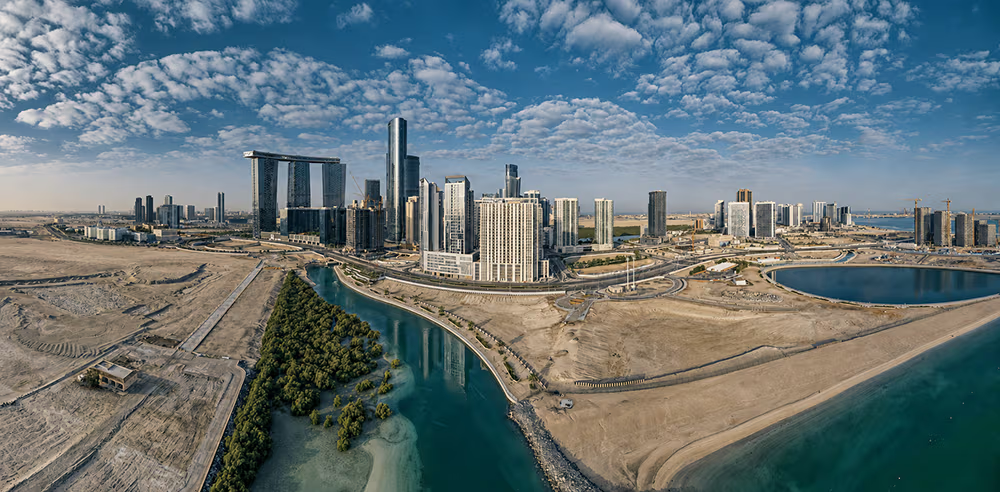
Competition at resale here is a specific building, from a developer you can name, reaching handover while you market your unit. Floor, layout and view will decide your outcome more than the island does.
Al Reem fits an investor who needs demand that pays now and accepts having to compete for it. It does not fit a buyer looking for a rare format with few comparable homes nearby, because this is the opposite kind of market.
- Numbers: Riviera Residences 50/50 to Q3 2029; The Artery launched without published terms; Radiant Terrace without published terms
- Infrastructure today: Reem Mall, Repton and GEMS schools, Sorbonne University, clinics, waterfront promenades; The Galleria a short drive away on Al Maryah
- Catalyst: ADGM, covering 14.38m sqm across Al Maryah and Al Reem
- Who rents here: finance, government and professional-services staff; relocating families
- Fits: investors who need demand that already pays
"On Al Reem I sat with a developer whose stock largely moves by the floor. Agencies and investors take several units at once, sometimes a whole floor, so a single studio or one-bedroom is close to impossible to secure — the smallest unit a private buyer can realistically reach on its own starts at two bedrooms. A brochure shows you the unit mix in the building. It does not show you which of those units are actually available to you."
Yas and Al Bahiya: The Destination and Its Edge
The two names in this heading are not one place. Sobha City sits in Al Bahiya, next to Yas rather than on it, and the journey times published for it are the developer's own estimates. Someone who wants to walk to Yas Bay is not a tenant for Al Bahiya, where the daily environment has still to arrive.
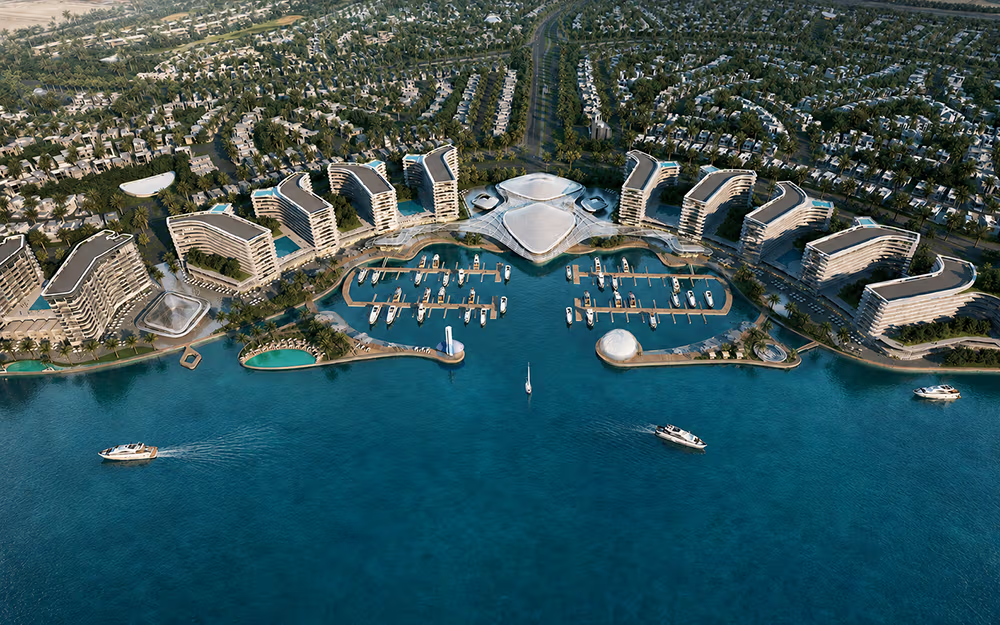
The announced Disney resort is the argument most often made for this area. It was confirmed in May 2025, and in January 2026 Disney's chief executive posted from the site, understood to be in northern Yas, although Miral has not confirmed the plot. No opening date has been announced, and Disney's parks chairman has described one to two years of design followed by four to six years of construction. That points to an opening no earlier than 2030. An unbuilt park cannot pay rent — a pattern we set out in full when Dubai Creek Harbour was priced ahead of its own catalyst.
Yas and Al Bahiya fit an investor who can hold the two apart — buying beside a working destination without assuming its traffic becomes their tenant. It does not fit anyone who needs confirmed dates before committing capital.
- Numbers: Sobha City masterplan of around 38m ft²; visitor figure above is 2024, not current traffic
- Infrastructure today: theme parks, Yas Marina Circuit, Yas Mall, hotels, Yas Bay waterfront — all on Yas, none of it in Al Bahiya
- Catalyst: announced Disney resort, understood to be in northern Yas; no opening date announced, and industry timelines point to 2030 at the earliest
- Who rents here: hospitality, events and retail staff on Yas; Al Bahiya's tenant base still forming
- Fits: investors who can separate a working destination from a new neighbourhood
Hudayriyat Island: Where Capital Arrived First
Wadeem, a community of more than 1,700 building plots, sold out in 72 hours for around US$1.5bn. Releases that clear in days are how this island came to lead the emirate on transaction value, and they tell you where the money went. They say less about who will live here.
What already works is leisure. The beaches, the surf lagoon, the velodrome and the sports parks are open, and entry to the island is free. People come for the day and go home to somewhere else.
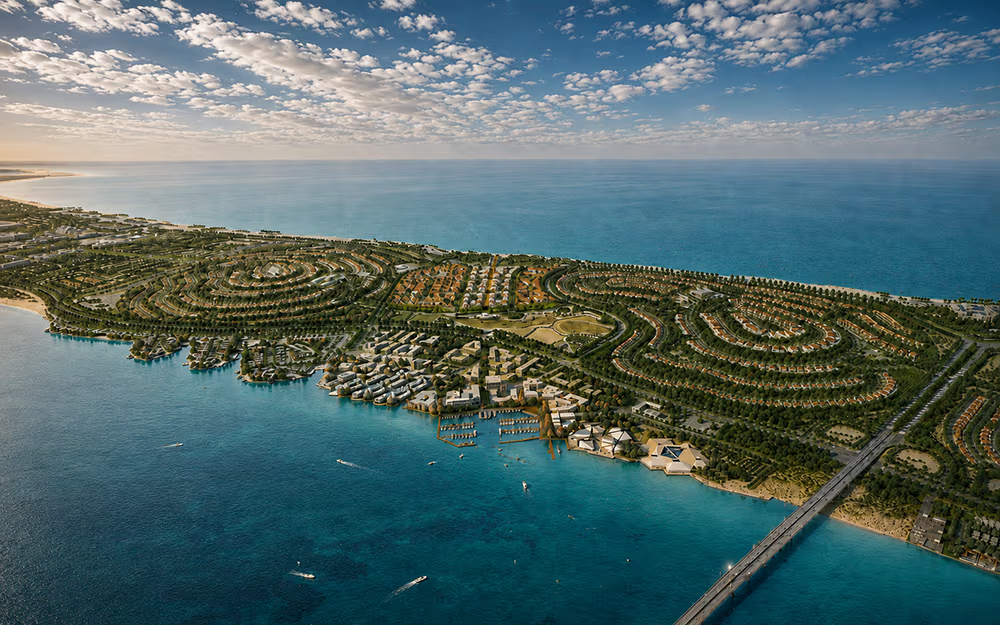
The homes are the part still arriving. The masterplan covers close to half the area of Abu Dhabi Island, so your resale value depends on how much of it gets delivered rather than on any single tower being finished. That is a wider bet than the other two areas ask of you, and it behaves much like a growth corridor priced before its infrastructure lands.
Hudayriyat fits a long hold — five years or more, with the island's delivery accepted as part of the purchase. It does not fit anyone who needs income sooner, with the current handovers falling between 2029 and 2030.
- Numbers: masterplan of around 51m sqm; Bashayer 50/50 to Q1 2030 for villas and Q2 2030 for apartments; Nawayef Village 50/50 to Q1 2029
- Infrastructure today: Marsana promenade and beach, Surf Abu Dhabi, Velodrome, 321Sports, Circuit X, around 220 km of cycling routes; island entry free
- Catalyst: delivery of the residential districts across the masterplan
- Who rents here: a residential tenant base still forming
- Fits: long-hold buyers on a horizon of five years or more
Which area fits your risk?
Two market-wide constraints apply to all three areas.
Rent increases are temporarily frozen. Abu Dhabi reduced the annual rental increase cap from 5% to 0% in June 2026, until further notice.
More competition is coming. ADREC expects 10,272 additional homes in 2026, with residential stock reaching 333,564 units in 2027.
The difference is where each area adds risk on top of that.
"In one Abu Dhabi sales centre I was shown several payment structures inside a single project — the schedule changed with the unit type, and we were choosing the plan as deliberately as we were choosing the apartment. Buyers compare the headline split between projects and assume it is fixed. It is one of the few things in an off-plan purchase you can still shape."
Abu Dhabi Property Investment: Five Things to Remember
- Match the area to when you need the money working. Al Reem pays from the first tenancy, Hudayriyat once the island is built. Both are sound choices on different calendars.
- Read the handover date before the payment split. It sets how many years your capital waits, and two identical structures can differ by more than a year.
- Count the supply arriving alongside you. Delivery for 2026 and 2027 is already published, so your resale competition can be estimated before you commit.
- Start from who rents in the area today. The tenant who exists now pays your first year; everything after that is a forecast you are choosing to accept.
- Take the terms on a dated document for your unit. Floor, layout and orientation move the outcome more than the area name does.
Frequently Asked Questions