Is Summer the Best Time to Buy Property in Dubai?


Dubai’s summer property market can become quieter in parts of the ready-home segment, yet prices do not follow a reliable seasonal discount. Mint Elite Real Estate’s analysis of Dubai Land Department transactions from 2022 to 2026 found mixed summer price movements across major districts, while ready-market activity and median prices more often strengthened in autumn.
This makes summer a selective buying window. Buyers may have more time to compare completed homes, test asking prices against recent transactions and negotiate before autumn activity returns. Off-plan property follows a different rhythm, shaped mainly by launch dates, new phases and released inventory.
Are Dubai Prices Lower in Summer?
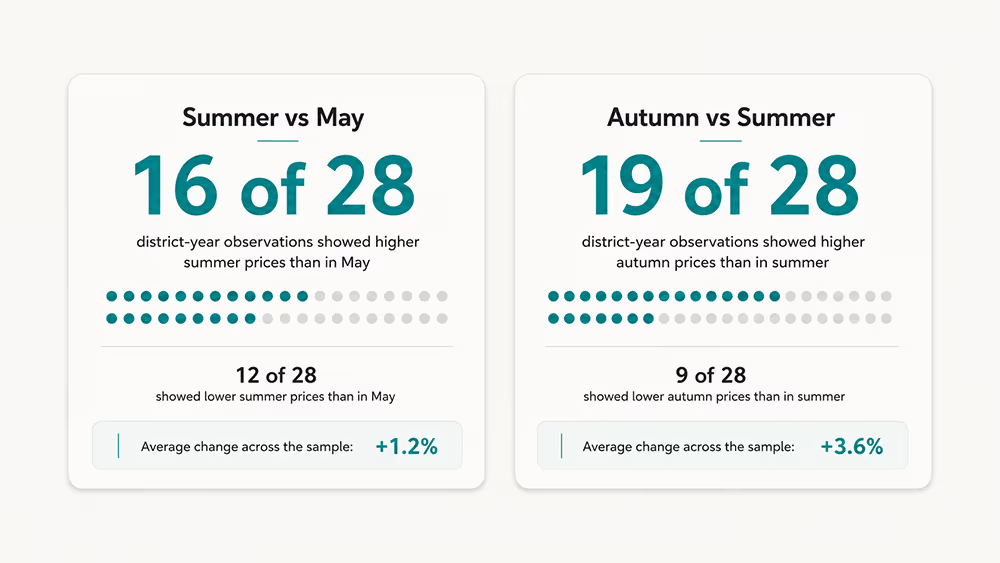
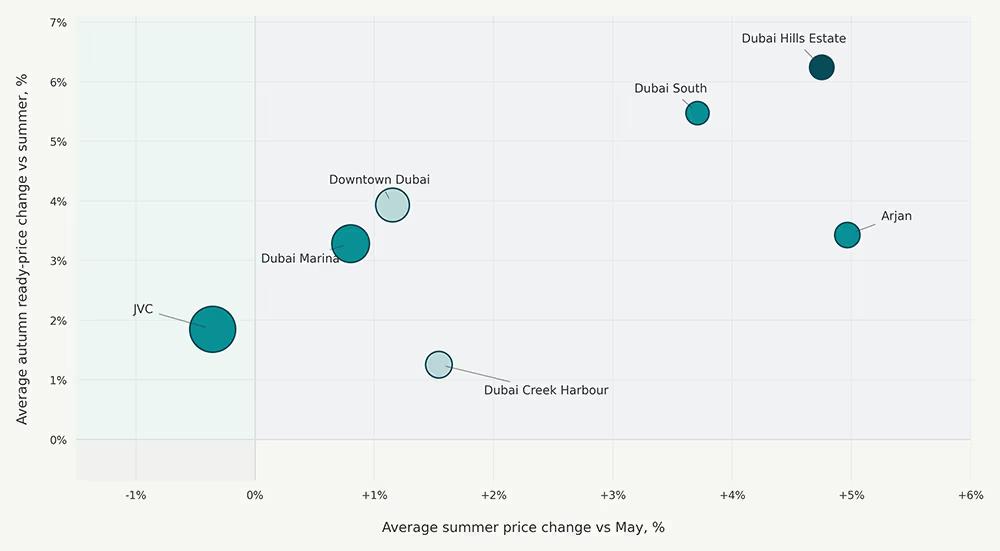
Dubai property prices show no dependable summer markdown. Across 28 area-by-year comparisons covering seven major districts from 2022 to 2025, the arithmetic mean of the June–August monthly median price per square foot was below May in 12 cases and above it in 16. Across the full sample, the average summer change was +1.2%.
The pattern varied materially by location. In JVC, the summer average exceeded May in all four years analysed. In Dubai South, it was lower in three of the four years. This contrast shows why the calendar alone provides a weak pricing signal.
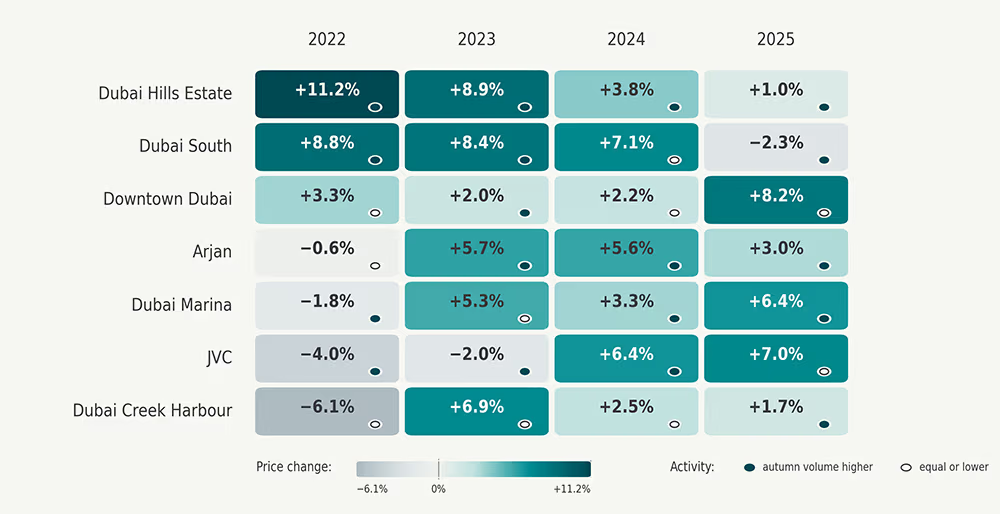
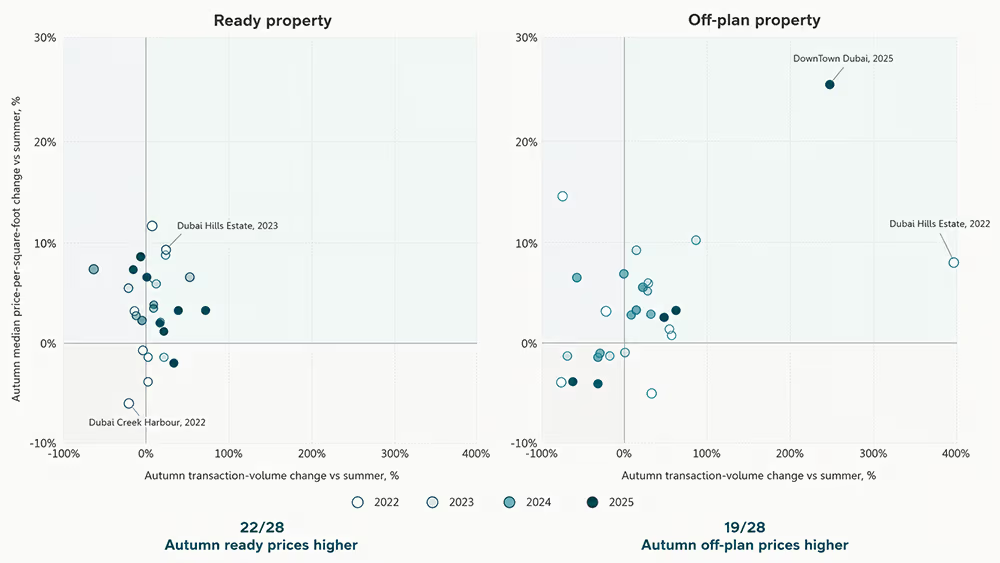
Autumn produced a clearer pattern. Across the overall residential sample, September–November averages exceeded summer levels in 19 of 28 comparisons, with an average increase of 3.6%. In the ready-property segment, the signal was stronger: autumn prices exceeded summer levels in 22 of 28 comparisons.
"When buyers expect a broad summer discount in Dubai, the data usually tells a more nuanced story. In the districts we reviewed, summer prices were mixed, while autumn more often brought stronger ready-market pricing. The real summer advantage is the extra room to compare completed units against recent DLD comparables before market activity picks up again."

For the wider 2026 market context — yields, supply, regulation and downside risks — see our Dubai real estate investment guide for 2026
Does Summer Give Buyers More Time?
Summer can create a quieter decision-making window in parts of Dubai’s ready-property market. Mint’s analysis of DLD transactions shows that autumn activity exceeded summer levels in three of the four complete years reviewed, with the strongest re-acceleration recorded in 2024.
Mint Autumn Re-acceleration Rate
The 2024 result is the clearest example: ready-property transaction volume rose 14.6% from summer to autumn. For buyers, a quieter period can provide more time to compare buildings, inspect completed units, review service charges and test an asking price against recent transactions.
DLD transaction volume measures closing activity. It does not reveal listing duration, the number of buyers pursuing each unit or the discount agreed in negotiations. The practical advantage therefore has to be confirmed within the specific project and unit.
June 2026 also provides an important counterpoint: transaction counts increased from May across all seven districts tracked by Mint. Seasonal patterns recur, though they vary by year and location.
"The practical value of a quieter period is time. Buyers can inspect more completed units, review service charges and challenge an asking price against recent transactions before activity gathers pace again."

A summer purchase becomes more compelling when slower activity coincides with a well-priced unit, sufficient resale depth and stable rental demand.
Which Dubai Areas Show Seasonality?
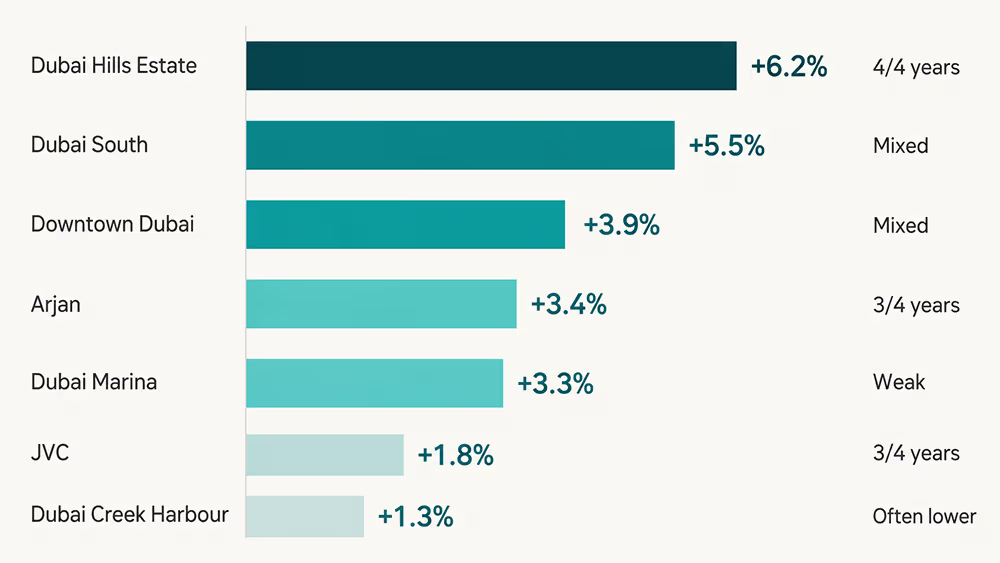
Seasonality varies materially across Dubai’s ready-property market. Dubai Hills Estate produced the clearest combined signal in Mint’s DLD analysis: autumn transaction activity exceeded summer levels in all four complete years reviewed, while the average autumn price uplift reached 6.2%.
Other districts followed different patterns. Dubai South recorded the second-highest average autumn price uplift at 5.5%, although transaction activity was mixed. Downtown Dubai and Dubai Marina also posted average autumn price increases of 3.9% and 3.3%, without a consistent recovery in transaction volume. In JVC, autumn activity was higher in three of four years, while the average price uplift remained modest at 1.8%.
Dubai Creek Harbour produced the weakest seasonal pattern in the sample. Autumn activity was often lower than summer, and the average ready-price uplift was 1.3%. This suggests that project launches, available inventory and unit mix may matter more there than the season itself.
"We use district seasonality as a screening tool. From there, we check resale depth in the building and compare the unit with recent transactions. A strong area-level pattern never justifies an unsupported asking price."
The key distinction is between price movement and market depth. A district can record higher autumn prices while transaction activity remains uneven. Buyers should therefore move from district-level evidence to the project, building and individual unit before making a decision.
How Do Ready and Off-Plan Differ?
The scatter plot separates the two segments. Ready-property observations cluster more often above zero on the price axis, while off-plan points are spread across all four combinations of rising or falling prices and transaction activity.
Off-plan medians can move when a new phase is priced higher, the unit mix changes or payment terms shift. A price increase with weaker volume therefore provides limited evidence of stronger underlying demand. Ready property is easier to benchmark against recent sales in the same building, adjusted for bedroom type, size, floor, view and condition.
Our guide to buying property in Dubai explains the wider ready-versus-off-plan trade-offs, purchase costs and due-diligence sequence.
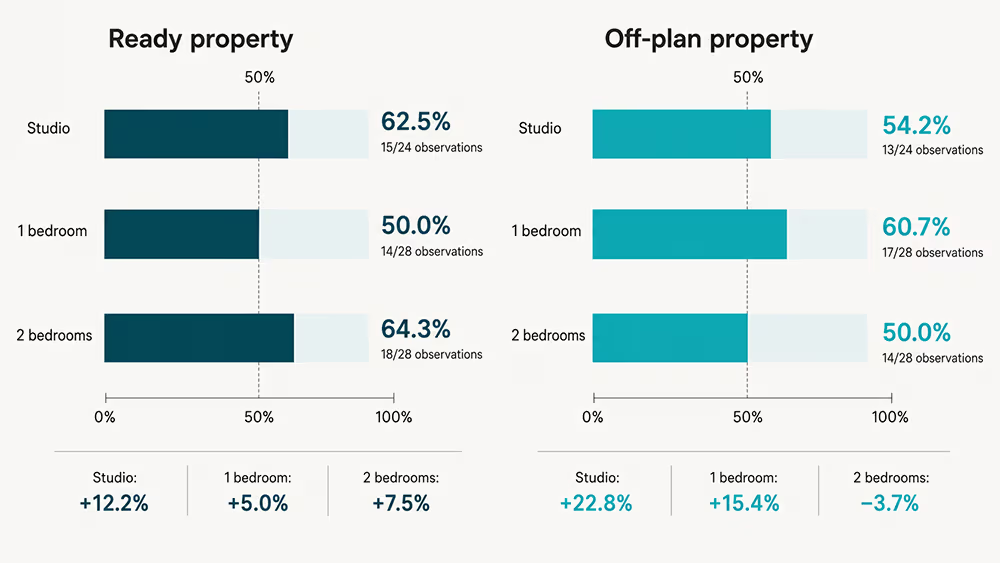
The unit-type breakdown shows where the autumn activity recovery was most consistent.
What Makes a Summer Deal Work?
Mint’s data gives summer a limited role. Prices were below May in only 12 of 28 area-by-year observations, while autumn ready-property prices exceeded summer in 22 of 28. Summer can improve timing, although it cannot rescue a weak asset.
Buy when the unit is supported by recent adjusted comparables, the building has healthy resale and rental depth, and the district shows a recurring autumn recovery.
Wait when the price looks reasonable but transaction evidence is thin, incoming supply is substantial, or an off-plan offer depends heavily on its current phase and incentives.
Pass when the asking premium lacks transaction support, recurring costs weaken the return, exit liquidity is limited, or the investment case requires aggressive capital appreciation.
For ready property, test the unit against same-building sales and current resale depth. For off-plan, compare the effective entry price with previous phases, competing launches, ready alternatives and expected supply at handover.
What Makes a Summer Deal Worth Buying?
- The price is supported by comparables.
Summer prices were below May in only 12 of 28 observations. The calendar alone is a weak reason to buy. - The district shows a repeatable pattern.
Autumn ready-property prices exceeded summer in 22 of 28 observations. Dubai Hills Estate produced the clearest signal, with a 6.2% average uplift and higher activity in all four years. - The market has enough transaction depth.
Overall ready-property activity increased from summer to autumn in three of four complete years, including a 14.6% rise in 2024. - The evidence matches the segment.
Ready units can be tested against same-building sales. Off-plan requires comparison with previous phases, competing launches, incentives and expected supply. - The investment works under conservative assumptions.
The entry price, recurring costs and exit liquidity should remain defensible without relying on rapid capital appreciation.
Frequently Asked Questions