Academic City & Dubai Silicon Oasis Property Guide


Dubai International Academic City and Dubai Silicon Oasis sit side by side but serve different roles. Academic City is centred on higher education and student demand, while Silicon Oasis adds a broader business-and-residential layer with offices, homes and everyday infrastructure.
For property buyers, the districts make more sense when viewed together. This guide explains how the location works today, what new investment and infrastructure may add, and how projects such as Greenz by Danube fit into its evolving residential story.
Academic City and Silicon Oasis: How the Area Works
Dubai International Academic City and Dubai Silicon Oasis are separate districts, but for property buyers they are best understood together. Academic City was created as a dedicated higher-education hub, while Dubai Silicon Oasis developed as a knowledge-and-innovation district with business, residential and everyday infrastructure.
Side by side, they form a more complete location story: one anchored in education, the other adding work, housing and urban services.
Academic City: Dubai’s Higher-Education Hub
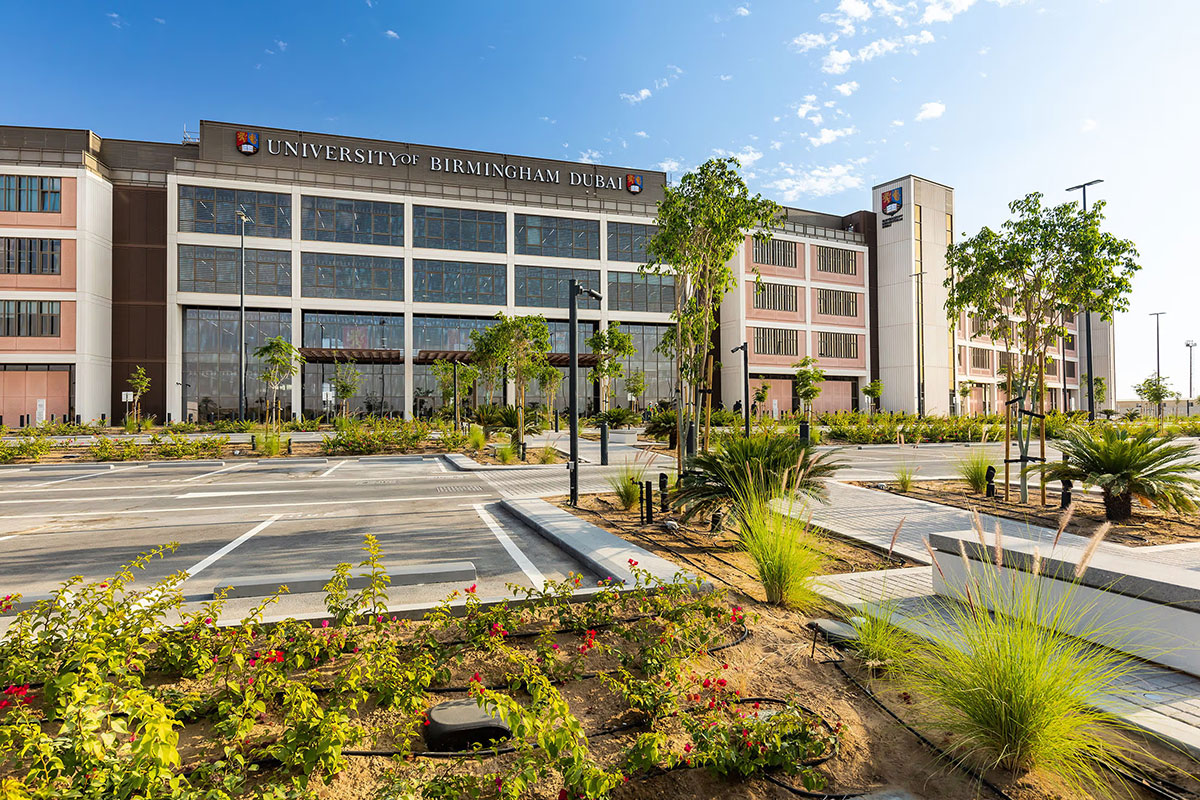
Dubai International Academic City was established in 2007 as a purpose-built district for higher education, bringing universities, students and academic infrastructure into one dedicated cluster. Today, it offers more than 500 higher-education programmes across fields such as business, engineering, medicine, technology and media.
The district is part of TECOM Group’s wider Education Cluster. By the end of the 2024/25 academic year, Dubai International Academic City and Dubai Knowledge Park together served 38,500+ students, up 15% year on year. The same cluster hosts universities and education providers from the UK, Australia, India and other international markets, reinforcing Dubai’s role as a regional study destination.
For property buyers, Academic City matters because it creates a steady, location-specific flow of students, faculty, university staff and education-related services. It is not a fully mature residential district on its own, but it provides one of the clearest functional anchors in this part of Dubai.
5 Key features of Academic City
- 28,000+ students study within Dubai International Academic City itself
- 500+ higher-education programmes are offered across the district
- The ecosystem includes campuses, research spaces and student accommodation, not just academic buildings
- In 2026, TECOM acquired a 300,000+ sq.ft. integrated university campus in DIAC for AED 125M
- Dubai Academic City is projected to accommodate 50,000+ university students by 2029
Silicon Oasis: Business, Housing and Everyday Infrastructure
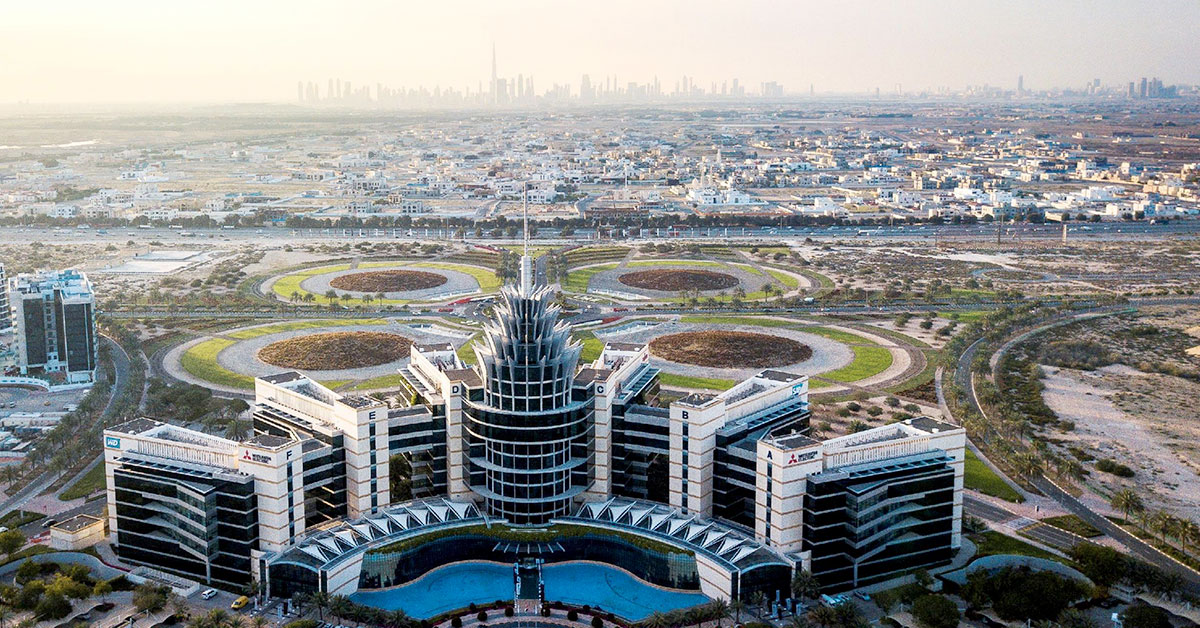
Dubai Silicon Oasis was established as a technology-led district and is now positioned as a specialised economic zone for knowledge and innovation, a business hub and a residential community. Unlike Academic City, Silicon Oasis already functions as a more complete mixed-use area, where offices, housing and daily infrastructure exist side by side.
This matters for property buyers because Silicon Oasis gives the wider corridor a more mature urban base. The district includes residential buildings, student accommodation and two villa communities — Cedre Villas and Semmer Villas — with more than 1,600 villas. It also has parks, retail, schools, clinics and other everyday amenities that make the area feel less like a single-purpose business zone and more like an established live-work district.
Silicon Oasis also has a clear economic function. Its innovation ecosystem includes Dubai Technology Entrepreneur Campus, described by DSO as the largest tech startup coworking space in the Middle East, with 108,000 sq.ft. dedicated to new businesses. The district is also recognised as one of Dubai’s five urban centres under the Dubai 2040 Urban Master Plan, focused on knowledge and innovation.
5 Key features of Dubai Silicon Oasis
- RIT Dubai operates its regional campus in Silicon Oasis, strengthening the district’s education-and-technology profile.
- Fakeeh University Hospital is a 350-bed smart hospital with 55 specialties.
- DSO is one of Dubai’s designated urban centres under the Dubai 2040 Urban Master Plan.
- The district has been used for autonomous delivery robots in Cedre Villas, reflecting its practical smart-city focus.
- Its next phase includes AED 12.8B in strategic expansion projects, which will be explained later in the article.
Why Academic City and Silicon Oasis Matter Together for Property Buyers
The strength of this location lies in the combination of education demand, an existing live-work district and visible long-term public investment.
Why the combination matters
- Education-led demand sits next to a more established live-work district.
- Universities, business activity, housing and daily infrastructure already coexist within the wider corridor.
- New residential projects are entering a location with real institutional anchors, not a blank-slate masterplan.
- Public investment and future transport upgrades build on an ecosystem that is already functioning.
How the Academic City–Silicon Oasis Corridor Evolved
Dubai Silicon Oasis Expansion and Blue Line Metro
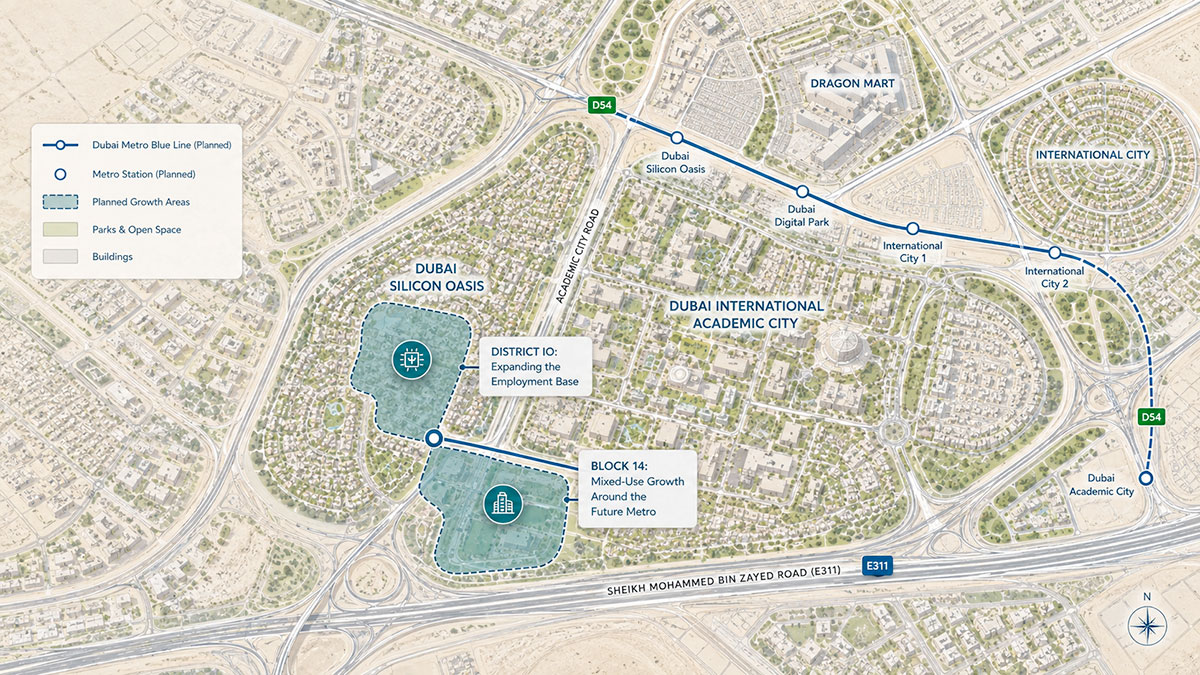
Dubai Silicon Oasis is entering a new phase of development built around business growth, mixed-use expansion and transport connectivity. In 2026, Dubai announced AED 12.8B in strategic expansion projects for DSO, centred on District IO and Block 14.
District IO: Expanding the Employment Base
The largest project is District IO, an AED 11B technology and innovation district. It is planned to accommodate:
- 6,500+ companies, SMEs and startups
- 70,000+ direct and indirect jobs over 10 years
- up to AED 103B in GDP contribution by 2036
For the area, this means a stronger long-term base of companies, employees and business activity alongside the existing education and residential ecosystem.
Block 14: Mixed-Use Growth Around the Future Metro
The second major project is Block 14, with AED 1.8B allocated to its first phase. It is planned as a mixed-use business and residential district near the future Dubai Metro Blue Line station in Silicon Oasis, with completion targeted for 2029.
This adds a more urban layer to DSO’s expansion: new business space, housing and transport-oriented development are being planned together, rather than as separate initiatives.
Blue Line Metro: Direct Rail Access to Silicon Oasis and Academic City
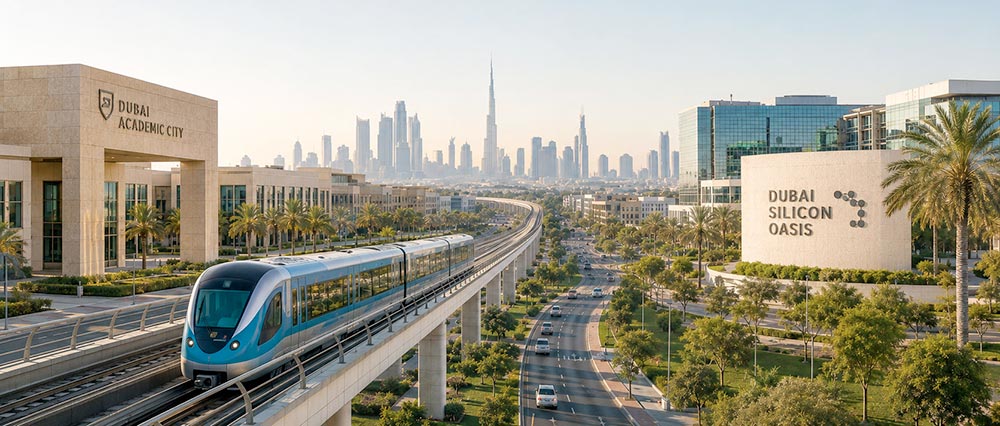
The Dubai Metro Blue Line will connect both Dubai Silicon Oasis and Dubai Academic City to the wider metro network.
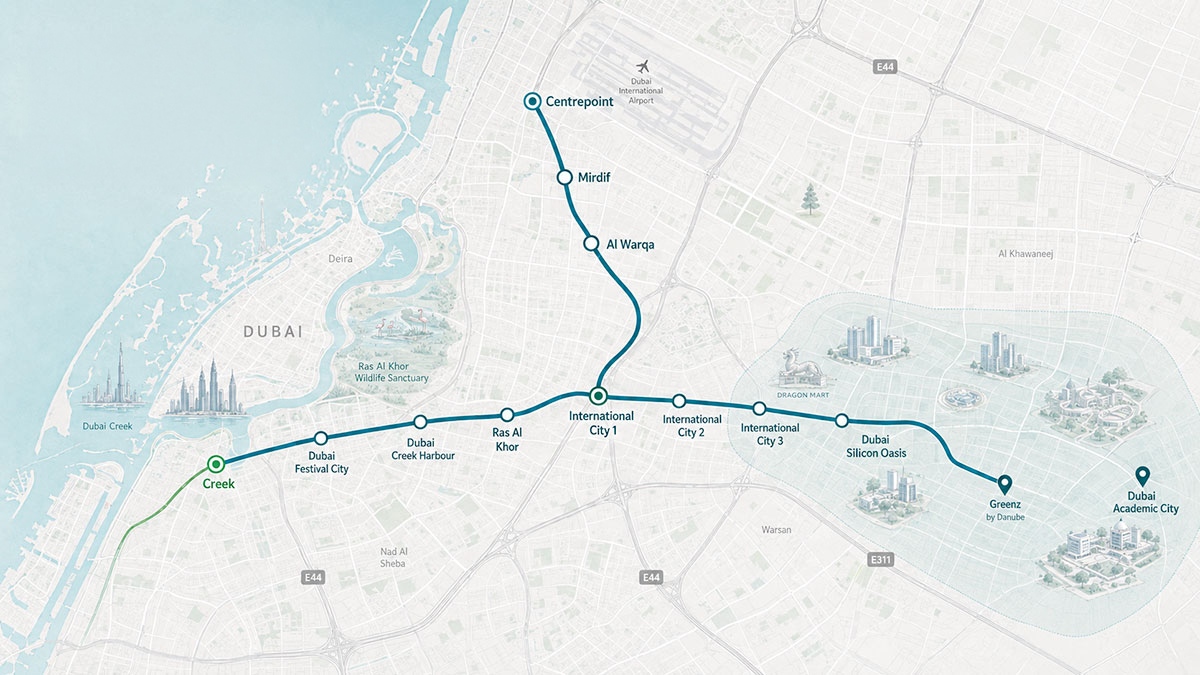
As of May 2026, the project was 20% complete, with opening scheduled for 9 September 2029. The line will span 30 km and include 14 stations.
For the wider corridor, the practical gain is substantial: the Blue Line will provide direct journeys to Dubai International Airport in around 20 minutes and is projected to serve 200,000 passengers per day by 2030, rising to 320,000 by 2040.
This places future residential growth, new employment capacity and citywide mobility into the same infrastructure cycle.
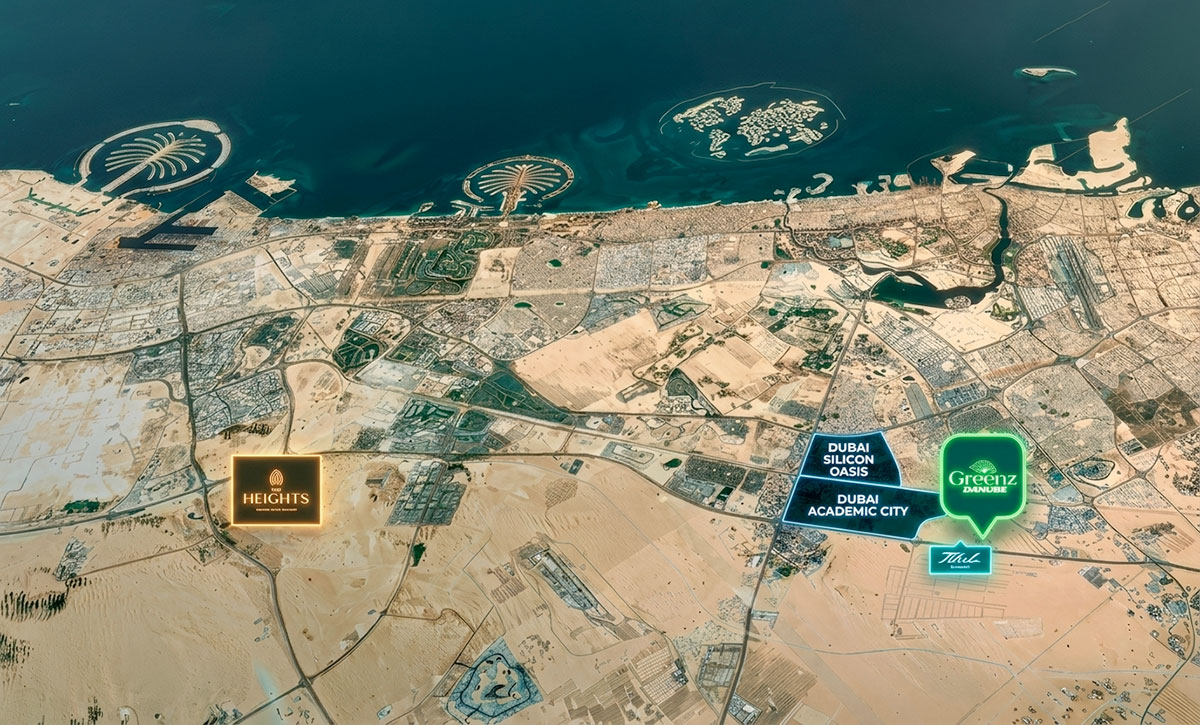
Greenz by Danube in Academic City
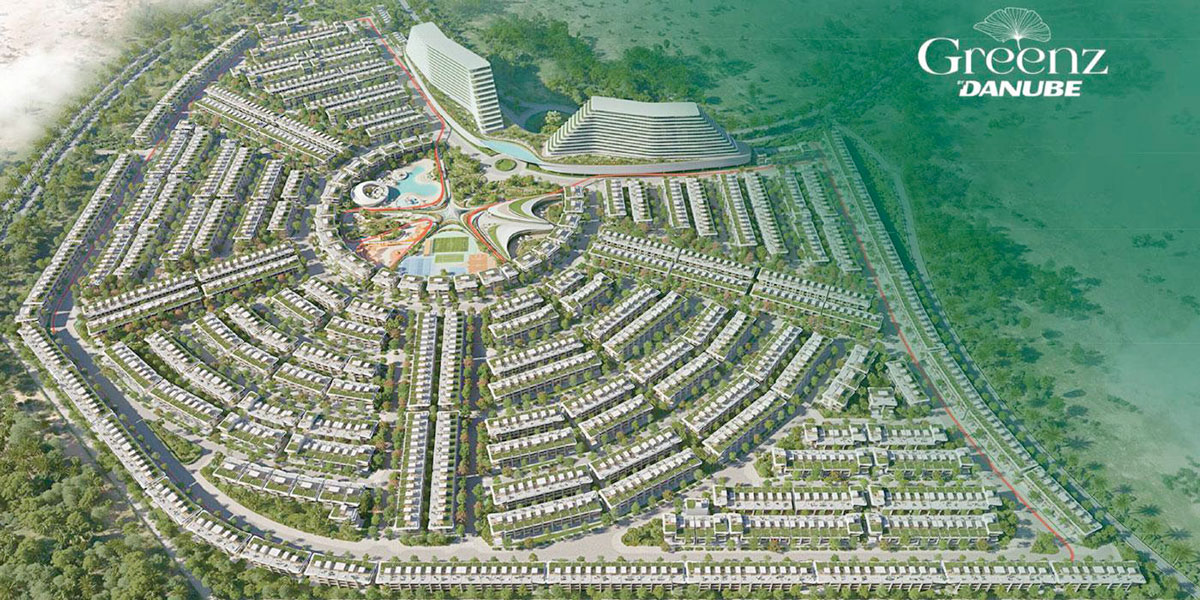
Greenz by Danube is a gated low-rise community of fully furnished 3–5BR townhouses and villas in Academic City, near Dubai Silicon Oasis.
The project starts from AED 3.5M, includes 700 residences and is scheduled for Q4 2029 handover. Danube presents Greenz as a major step into master-planned community development.
What the Project Includes
Greenz is designed as a family-oriented villa and townhouse community with a strong internal lifestyle layer. According to Danube, the project includes:
- 50+ amenities
- 400,000+ sq.ft. of lifestyle and green amenities
- Beach Hub
- Dancing Fountain
- Wellness Hub
- Sports Hub with 10 dedicated courts
- Beach clubhouse, jogging tracks, pools, kids’ zones, prayer hall, spa, business centre and landscaped gardens.
Who Greenz May Suit
Greenz is most relevant for:
- buyers seeking a furnished family home in a low-rise community;
- purchasers who want a lower entry point into villa and townhouse living than many established premium masterplans;
- investors looking at a project tied to the wider Academic City–Silicon Oasis growth story, but with a more accessible ticket than larger high-end villa communities.
For investors, Greenz is easier to read than a pure luxury villa launch: the entry price is lower, the unit formats are broader, and the handover aligns with the expected delivery of the Blue Line Metro in 2029. The key question is whether Danube can execute this larger low-rise format at a level that supports resale demand by handover.
“Greenz is attractive because it gives buyers a lower-ticket entry into a villa-community format within a location that is gaining stronger education, business and infrastructure foundations. The real investment test is not the masterplan alone, but the exact unit, entry price and how confidently the project can hold demand by handover.”
Vladimir Denisyuk, Head of Sales at Mint Elite Real Estate
“Greenz is attractive because it gives buyers a lower-ticket entry into a villa-community format within a location that is gaining stronger education, business and infrastructure foundations. The real investment test is not the masterplan alone, but the exact unit, entry price and how confidently the project can hold demand by handover.”

Tilal by Binghatti in Academic City
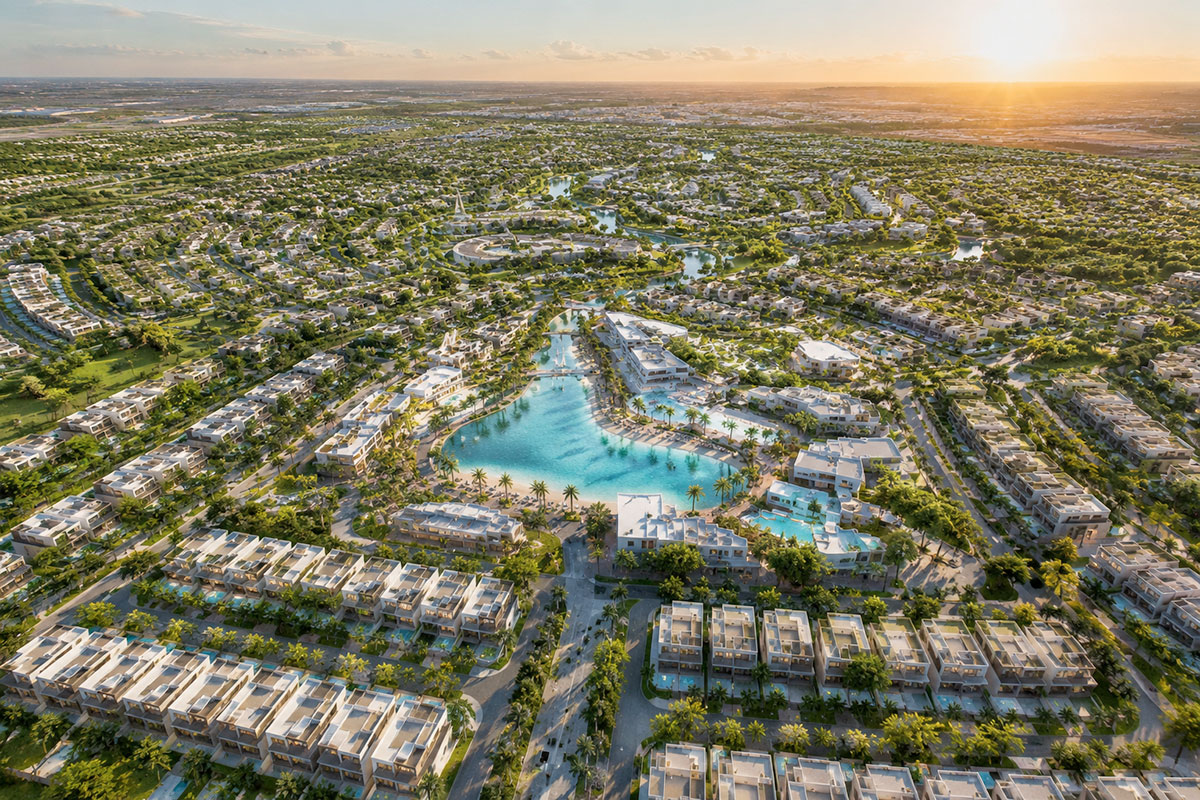
Tilal by Binghatti is Binghatti’s first master-planned villa community, developed in Academic City across 10M+ sq.ft. The project includes 4- and 5-bedroom townhouses, 6-bedroom twin and standalone villas, and 7-bedroom standalone villas.
What the Project Includes
Tilal is planned as a self-contained low-rise family district, not just a collection of villas. The masterplan includes:
- 50+ lifestyle amenities
- 12,000 sq.m. man-made beach
- swimmable lakes and landscaped parks
- jogging and cycling tracks
- sports, wellness and fitness facilities
- retail boulevard and clubhouse
- nursery, clinics and mosque
- children’s play areas, pet parks and green corridors.
Who Tilal May Suit
Tilal is best read as a product for buyers who want larger family homes with internal community infrastructure. Its 4–7BR formats, low-rise planning and everyday facilities make it especially relevant for:
- families buying for personal use;
- buyers seeking a villa-community lifestyle outside Dubai’s more established premium low-rise districts;
- investors focused on future end-user demand for spacious family housing, rather than compact, high-liquidity apartment stock.
"Tilal is a family-housing story first. The scale, 4–7-bedroom formats and internal infrastructure make it relevant for buyers looking at long-term end-user demand, not for those seeking a simple low-ticket investment product."
The Heights by Emaar: A Wider Market Signal
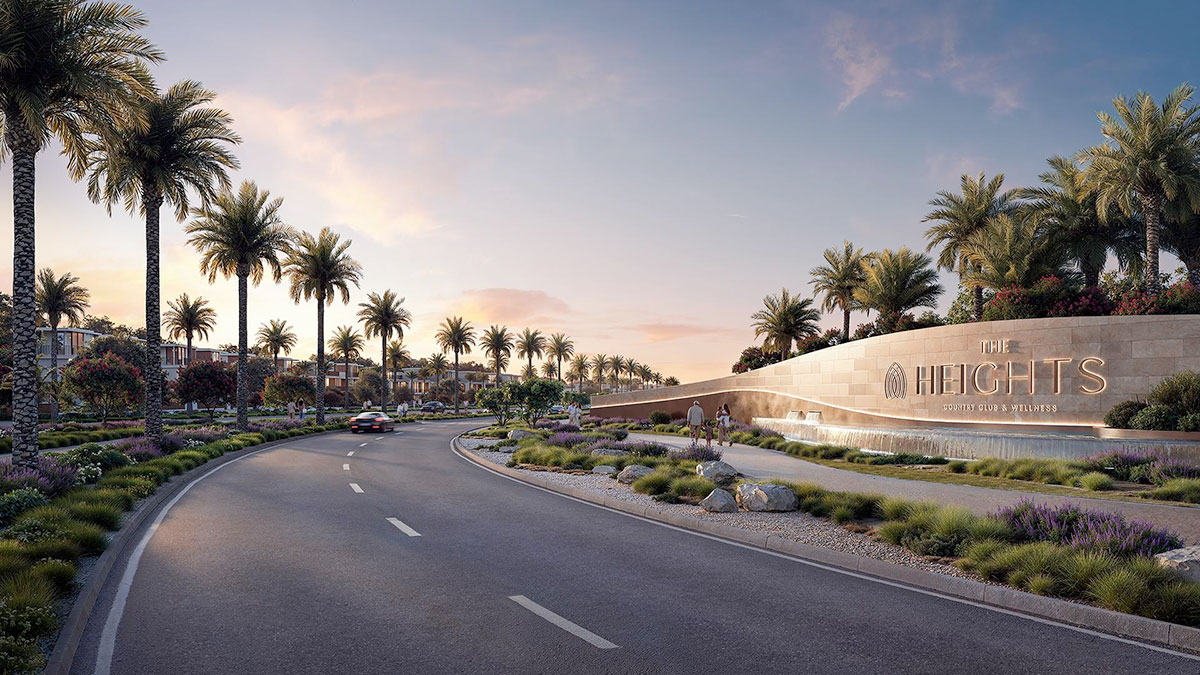
In 2024, Emaar launched The Heights Country Club & Wellness — a large low-rise masterplan built around villas, open space and full internal infrastructure. The project helps place Greenz and Tilal in a broader market context: Dubai’s villa segment is increasingly shaped by large master-planned communities, rather than standalone low-rise launches.
Five Key Features of The Heights
- 81 million sq.ft. masterplan with AED 55B development value
- 3–5BR villas
- 1.3 million sq.m. of open space
- A wellness-led community core: wellness centre, meditation garden, wellness lake, promenade, yoga lake and fitness areas
- Full internal infrastructure: schools, hospitals, mosques, retail and dining areas planned within the masterplan
The Heights shows how Dubai’s villa segment is moving beyond individual homes toward full-scale residential ecosystems, where open space, wellness and everyday infrastructure become part of the product itself. Greenz and Tilal operate in another location and at another market level, but they emerge within the same broader shift toward larger, more self-contained low-rise communities.
Key Takeaways
- The strongest part of the location thesis is the overlap of three demand layers.
Academic City brings education-led demand, Silicon Oasis adds jobs and daily infrastructure, while the next phase of public investment strengthens connectivity and mixed-use growth. Together, these layers create a more durable residential case than any single driver on its own. - The area is moving from a functional cluster to a fuller urban corridor.
Education and business activity already exist here. District IO, Block 14 and the Blue Line suggest a shift toward a location where more people can study, work and live within the same wider ecosystem. That matters for long-term housing demand. - Greenz and Tilal signal a change in how developers are reading Academic City.
The district is beginning to attract larger low-rise family formats, rather than remaining tied mainly to campuses, student flows and adjacent business demand. This expands the buyer profile the area can potentially address. - The two projects reflect different investment logics.
Greenz offers a more accessible entry into the villa-community theme through furnished 3–5BR homes. Tilal targets a higher-cheque, more end-user-led buyer through larger formats and a heavier masterplan proposition. The right project depends on the buyer’s capital, horizon and exit expectations. - The main investor risk sits at asset level, not district level.
The location story has become materially stronger. The real decision now comes down to entry price, unit selection, payment structure, delivery quality, future competing supply and resale depth by handover. A good district thesis can still produce a weak purchase when the asset is chosen poorly.